

Clinical trial lab costs break down into six buckets: setup and project management fees, per-assay or per-sample analytical charges, collection kits and supplies, courier and cold chain logistics, storage and retest fees, and the invoicing terms that govern when everything gets paid. The biggest volatility comes from specialty biomarker assays and dry ice shipping. Start by mapping your protocol's visit grid to each cost line and requiring itemized documentation for every pass-through charge before you sign anything.
TL;DR:
- Specialty biomarker assays and ultra-low temperature shipping can drive logistics costs up to 25 percent of per-patient budgets if not properly accounted for.
- Accurate modeling requires decomposing the visit schedule into discrete tasks, assigning billing units, and including fixed setup, validation, and contingency fees.
- Pass-through charges like kits, courier fees, and dry ice must be documented with invoices or manifests to prevent cost disputes and ensure transparency.
- Contracts should specify who pays for protocol amendments and revalidations upfront, with defined limits and reconciliation procedures to avoid unexpected charges.
- Always request detailed invoices and documentation to verify charges and reduce reconciliation delays, which are a leading source of cost overruns.
What drives clinical trial lab costs from setup to retest?
Every central lab budget is built from the same six components, but sponsors who don't itemize them tend to get surprised at month three. Understanding the billing unit behind each fee is the difference between a defensible budget and a forecast that falls apart at the first amendment.
Analytical pricing usually runs on one of two models: per-assay or per-sample. A basic chemistry panel might bill per test, while a specialty biomarker assay often carries a separate validation fee charged upfront, before a single patient sample runs through the instrument. That validation cost reflects real bench work. Bespoke immunoassays and sequencing panels require method development the lab must complete before analysis begins, and sponsors pay for that groundwork separately from per-sample charges.
Administrative and project fees cover the non-reimbursable start-up work: database development, the laboratory instruction manual, protocol-specific specifications, and staff training before enrollment opens. These setup activities are typically billed once, followed by a recurring monthly project-management fee for the life of the study. At academic medical centers, expect separate departmental setup charges for laboratory, pharmacy, and radiology, since each department reviews the protocol independently.
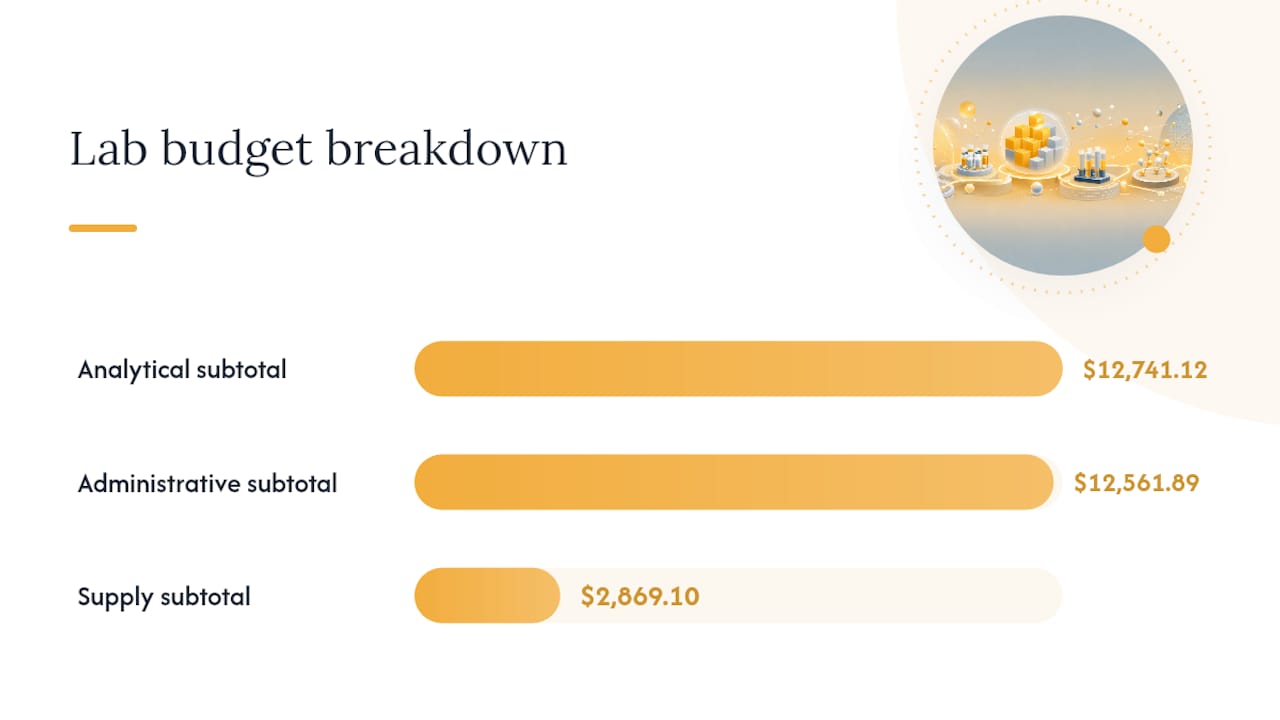
Supply costs include kit construction, collection kits (small draws versus standard panels), and shippers rated for ambient or frozen specimens. A real-world example from a filed central lab budget breaks a study's supply subtotal at $2,869.10 against an analytical subtotal of $12,741.12 and administrative costs of $12,561.89, for a combined line-item total near $29,196. That ratio, analytical costs running roughly equal to administrative overhead, is a useful sanity check against your own quote.
Logistics and storage round out the picture:
- Courier fees for routine specimen pickup, separate from dry ice or hazardous goods surcharges
- Cold chain costs that can consume 15 to 25 percent of per-patient testing budgets when ultra-low temperature shipping is required
- Sample storage billed per tube, per month, for specimens held beyond the active testing window
- Unscheduled or retest analytical fees when a sample fails quality control and needs rerunning
- Optional add-on tests invoiced separately from the protocol's core panel
How do you model per-patient lab costs from the visit grid?
The schedule of activities in your protocol is the source document for every lab cost line. Sponsors who skip this step end up reconciling invoices against guesswork instead of a real model.
- Decompose the SOE into discrete tasks. Tag each activity as central or local, and assign it a role, professional, technical, coordinator, or pharmacy, since labor categories affect who gets billed and how.
- Assign billing units to each task. Some costs are per-sample, others per-shipment, per-visit, or per-month for storage. Multiply by expected sample counts across the enrollment target to get a per-patient baseline.
- Layer in fixed fees. Add one-time setup and assay validation charges, plus the recurring monthly project-management estimate, across the full study duration.
- Build in contingency. Set aside a percentage, or a capped allowance, for protocol amendments, unscheduled visits, kit spoilage, and reagent price swings.
Getting this mapping right also means knowing which tasks belong to the central lab versus the site itself. When a study uses a central lab, the lab agreement handles analysis costs separately from the site budget, and sites are typically paid only for collection and shipping. A lab strategy memo that assigns every assay to central or local before the budget is finalized prevents the double counting that inflates so many first-draft estimates.
Pro Tip: Run your visit grid past the lab's project manager before finalizing the budget. A five-minute review often catches mismatched sample volumes or missing kit types that would otherwise surface as a change order three months into enrollment.
What contract terms protect you from cost volatility?
Pricing structure matters more than the initial quote. A cost-plus model with dry ice indexation lets freight charges track actual carrier rates instead of a flat estimate that becomes stale the moment fuel surcharges shift. For studies with a mix of routine and specialty panels, a three-tier pricing structure, basic chemistry, standard immunoassay, and complex biomarker, keeps complexity properly priced without forcing every sample into one rate card.
Documentation requirements deserve their own line in the contract. Require the lab to route every pass-through charge, kits, courier fees, dry ice surcharges, to actual evidence:
- Kit manifests showing what was shipped and to which site
- Courier receipts and dry ice or hazardous goods documentation
- Itemized invoices tied to specific specimen shipments, not lump-sum estimates
Pass-throughs should be routed to real evidence, an invoice, a courier log, a kit manifest, with the contract specifying whether the sponsor pays directly, reimburses at cost, or draws against a capped allowance. Without that clause, "complete documentation" becomes whatever the lab decides to send at month end.
Change control needs the same specificity. Contracts on unit price schedules agreed at award often only partially recover the cost of protocol amendments, late-added sites, or assay revalidation through change orders, which creates switching costs sponsors rarely see coming. Spell out upfront who pays when a protocol amendment forces revalidation of an existing assay. Cap optional and unscheduled testing at a defined dollar amount, and set a monthly reconciliation date so both parties are working from the same numbers before disputes accumulate.
How does lab invoicing and payment typically work?
Central labs generally invoice monthly for specimens received during the prior period, plus any pass-through expenses, with a final reconciliation once the study closes out. That cadence keeps costs visible instead of arriving as one large bill at the end of enrollment.
To substantiate charges, request courier logs, chain-of-custody records, and kit manifests alongside each invoice rather than a summary total. Net 30 is a common payment term, and contracts should specify how credits get handled when a site orders a non-protocol add-on test that falls outside the core panel.
A few habits reduce disputes before they start:
- Standardize the invoice format across all sites and study periods
- Require a sponsor-facing report on turnaround times and pending specimens each billing cycle
- Match every pass-through line to the documentation type it required, not a generic "expenses" bucket
Kohealth Labs' perspective: where the hidden costs actually hide
Most cost overruns in trial labs don't come from the sticker price. They come from reconciliation delays, late fees, and re-draws caused by slow results. Integrated specimen pickup, electronic results delivery, and LIS integration cut the manual matching that turns a routine invoice into a two-week dispute. Faster turnaround also means fewer unscheduled visits when a sample needs to be redrawn, which keeps per-patient costs from creeping upward mid-study.
— Kohealth Labs
How Kohealth Labs supports your next study's lab budget
Kohealth Labs gives sponsors a single point of contact for the exact cost categories covered above, so your budget reflects what a study actually needs instead of a generic rate card. Our clinical trials and research laboratory services pair with specimen pickup and medical courier support, molecular and PCR testing, and LIS/EHR integration built to cut the reconciliation overhead that inflates monthly invoices.

If you're building a protocol visit grid and need per-assay pricing mapped against it, our integrated clinical diagnostics team can walk through your schedule of activities and flag where specialty testing will require validation fees. For sponsors evaluating biomarker panels specifically, the specialty testing overview outlines what's available before you finalize a budget line. Request a study quote or onboarding conversation to see how your protocol maps to real cost figures instead of estimates.
Sources
- Exhibit: Central lab services — SEC filing
- Contracts & budgets: a regulator-ready blueprint for site start-up — ClinicalTrials101
FAQ
What is included in a central lab setup fee?
A central lab setup fee typically covers database development, the laboratory instruction manual, protocol-specific specifications, and investigator training, all completed before the first patient enrolls. It's billed once, separately from the recurring monthly project-management fee.
How much of a trial's lab budget goes to logistics?
Cold chain shipping, especially ultra-low temperature transport for specialty samples, can account for 15 to 25 percent of per-patient testing costs. Routine courier fees are billed separately from dry ice and hazardous goods surcharges.
Who pays for assay revalidation after a protocol amendment?
This should be defined in the contract before the study starts, since unit price schedules agreed at award often only partially cover amendment-driven costs through standard change orders. Sponsors should negotiate this clause upfront rather than after an amendment triggers a dispute.
Does Kohealth Labs support clinical trial lab services?
Yes. Kohealth Labs offers clinical trials and research laboratory services alongside specimen pickup, molecular and PCR testing, and LIS/EHR integration for sponsors and CROs. Current pricing and service details are available by requesting a quote directly through Kohealth Labs.
What's the difference between central lab and site lab billing?
When a study uses a central lab, the lab agreement covers analysis and data management costs separately, while sites are typically paid only for specimen collection and shipping. Mixing up these two billing tracks is one of the most common budgeting errors sponsors make.