

What is grant-aligned diagnostic data delivery?
Grant-aligned diagnostic data delivery is the structured process of collecting, formatting, and transferring diagnostic information so it meets the specific data requirements of healthcare research grants and public health funding programs. The FDA Diagnostic Data Program defines this mission clearly: improve the collection, portability, and utility of diagnostic data originating from both inside and outside clinical laboratories, with real-world applicability at the center.
This is not simply about moving data from point A to point B. The data must arrive in the right format, at the right time, with a complete audit trail, and in compliance with the standards that grant agencies require before they release funding or accept research results.
Core elements of grant-aligned diagnostic data delivery include:
- Data standardization: Diagnostic outputs formatted to machine-readable specifications, including the JSON schemas mandated by Grants.gov data standards under the GREAT Act
- Interoperability: Systems that allow diagnostic data from labs, point-of-care devices, and radiology to communicate across platforms without manual re-entry
- Audit compliance: Complete, traceable records of data origin, handling, and transmission that satisfy federal grant reporting requirements
- Portability: Data packaged so it can move between clinical sites, funding agencies, and national health systems without loss of integrity
- Utility: Outputs formatted for direct use in analytics, epidemiology, and clinical decision-making, not just storage
Why this process matters for healthcare research and public health
Grant-funded research depends on diagnostic data that is accurate, timely, and formatted correctly. When data delivery fails to meet grant standards, funding eligibility is at risk, trial timelines extend, and public health decisions get delayed. The stakes are real.
The FDA's Diagnostic Data Program underscores that during complex trials and public health emergencies, seamless data flow is critical for informed and timely decisions. COVID-19 made this painfully visible: fragmented diagnostic data slowed response times across health systems that lacked harmonized delivery infrastructure.
Key reasons aligned data delivery matters:
- Supports funding eligibility by satisfying grant reporting requirements from agencies like HHS, NIH, and CDC
- Accelerates clinical trial completion by giving CROs analysis-ready data bundles rather than raw, unstructured outputs
- Enables accurate disease monitoring and epidemiological modeling at the population level
- Connects clinical findings to policy decisions by making data usable across health system levels
- Reduces compliance costs when machine-readable formats replace manual PDF-based reporting
Unitaid's work on integrated diagnostic tools across multi-disease networks reinforces this point globally: interoperability with national data systems and alignment with country-level delivery models are prerequisites for grant success, not optional features.
Key components and best practices for implementation
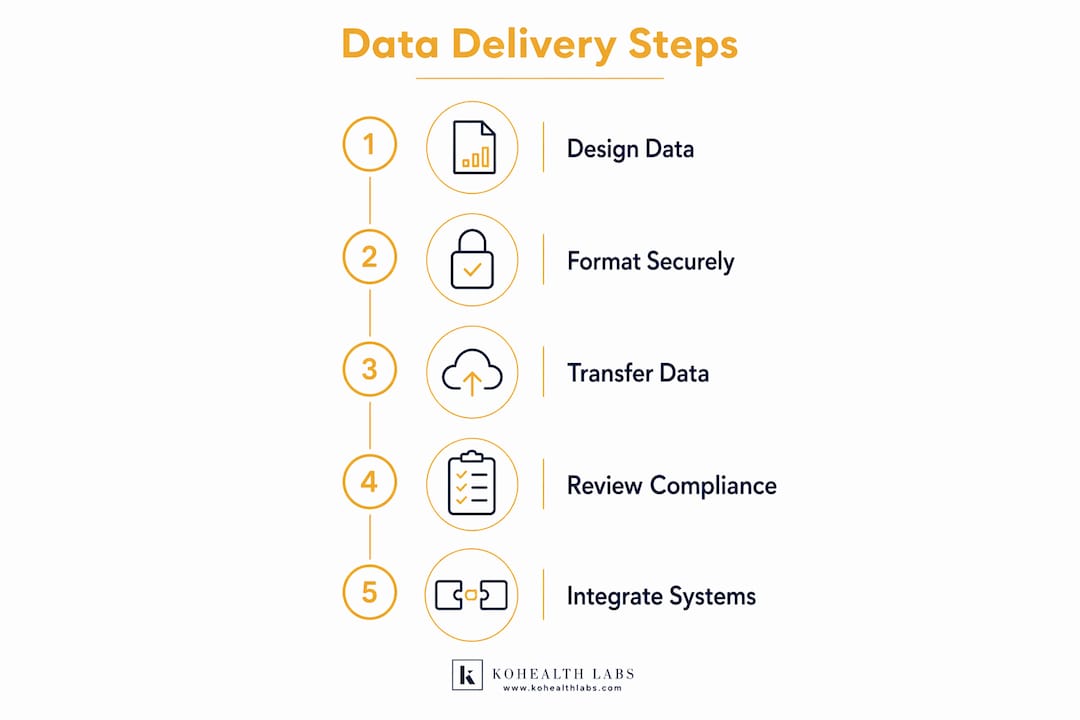
Getting grant-aligned delivery right requires both technical architecture and organizational discipline. Most programs that fail do so because they treat data compliance as a reporting task at the end of a project rather than a design requirement from day one.
Technical components you need in place:
- Structured data collection: Instruments and lab systems configured to capture data in standardized fields from the moment of collection
- Data harmonization layers: Middleware that unifies outputs from different instruments and point-of-care devices into a consistent format. Dedicated middleware platforms are crucial for device integration and rules-based autovalidation, ensuring data delivered meets audit and analysis readiness requirements
- Single Source of Truth: A centralized data management layer that extracts, validates, and enhances diagnostic data before it reaches any grant reporting system. Diagnostic data often resides fragmented across laboratory information systems and departmental silos; a management layer resolves this before it becomes a compliance problem
- Machine-readable outputs: JSON schemas aligned with GREAT Act standards, which mandate nonproprietary, structured data definitions across the grant lifecycle
- Audit trails: Timestamped logs of every data transaction, modification, and transfer, accessible for federal audit review
Operational best practices:
- Assign a data compliance lead at project inception, not at the reporting phase
- Map all diagnostic instruments to the grant's required data fields before enrollment begins
- Build scalability into the architecture so multi-site trials can add locations without rebuilding the data pipeline
- Coordinate with grant program officers early to confirm which data standards apply to your specific award
- Test data transmission pathways against grant submission systems before the trial goes live
Pro Tip: Design your machine-readable data formats, including JSON schemas, at the grant proposal stage. Retrofitting structured formats onto legacy data after collection is one of the most common and costly compliance failures in federally funded diagnostic research.
Privacy and security are non-negotiable throughout. Both FDA and Grants.gov frameworks mandate secure, compliant data handling aligned with federal privacy requirements and audit standards. HIPAA compliance, data encryption in transit and at rest, and role-based access controls are baseline requirements for any grant-aligned diagnostic data system operating in the US.

How Kohealth Labs supports grant-aligned diagnostic data delivery
Kohealth Labs addresses the data fragmentation problem that derails so many grant-funded research programs. Its model combines laboratory services, radiology, and AI-driven analytics under a single contract, which means CROs and government agencies receive one unified, analysis-ready data bundle rather than disconnected outputs from multiple vendors.
Here is how that integration translates into grant compliance in practice:
-
Unified data from day one. Kohealth Labs collects lab and radiology data through a single coordinated workflow, eliminating the reconciliation step that typically delays grant reporting. Data arrives pre-harmonized and formatted for downstream analysis.
-
AI-driven quality control. The platform uses AI to identify deviations in diagnostic data before they reach the reporting stage. This catches anomalies that would otherwise trigger audit flags or require costly data corrections after submission.
-
Single-contract simplicity. Managing multiple diagnostic vendors across a clinical trial creates version control problems, inconsistent data formats, and coordination gaps. Kohealth Labs' single-contract model removes those variables, giving grant managers a clean chain of custody for all diagnostic data.
-
Faster trial timelines. Integrated diagnostics covering over 100 biomarkers reduce the turnaround time between data collection and analysis-ready delivery. For grant-funded trials with strict milestone reporting schedules, that speed directly affects compliance and funding continuity.
-
Multi-site coordination. Grant-funded research rarely runs at a single location. Kohealth Labs supports multi-site diagnostic data coordination, ensuring consistent data standards across all participating sites regardless of geography or instrument type.
-
Regulatory alignment. Kohealth Labs' data delivery architecture is built to align with FDA Diagnostic Data Program standards and Grants.gov reporting requirements, so the data your team submits is already structured for federal review.
-
Radiology integration. Most diagnostic data programs focus on lab outputs and treat imaging separately. Kohealth Labs integrates radiology data into the same delivery pipeline, giving grant programs a complete diagnostic picture without a secondary data reconciliation process.
Professionals working on clinical trial diagnostics can see how this integrated approach reduces both administrative burden and compliance risk across the full trial lifecycle.
Key Takeaways
Grant-aligned diagnostic data delivery requires structured collection, machine-readable formatting, and a unified data management layer to satisfy FDA and Grants.gov standards from project inception through final reporting.
| Point | Details |
|---|---|
| Start with data design | Build JSON schemas and data standards into the grant proposal, not the reporting phase. |
| Use a Single Source of Truth | Centralize diagnostic data before sharing with grant agencies to eliminate fragmentation and audit gaps. |
| Interoperability is required | Diagnostic systems must connect across labs, point-of-care devices, and radiology to meet federal grant standards. |
| Compliance covers privacy too | FDA and Grants.gov frameworks mandate secure, auditable data handling aligned with federal privacy requirements. |
| Integration accelerates trials | Unified lab, radiology, and AI-driven data delivery reduces turnaround time and supports milestone-based grant reporting. |