
The state-of-the-art approach to DICOM de-identification is a hybrid pipeline: rule-based metadata scrubbing paired with AI-assisted pixel detection, checked by uncertainty-aware human review. Applications must also set the Patient Identity Removed (0012,0062) attribute to YES and log the exact method used. Success looks like documented method codes, reproducible logs, and sampling-based QA rather than a claim of perfect anonymization. Start with a pilot on one representative imaging modality before scaling the pipeline across your full archive.
TL;DR:
- Applying the least restrictive de-identification profile that meets your data's destination risk threshold is crucial to preserve clinical usefulness.
- Metadata tags such as patient names, IDs, and birth dates typically require removal or pseudonym replacement, while private tags demand explicit detection and careful handling.
- Pixel-level PHI, like burned-in text or overlays, must be detected with staged AI methods and scored for uncertainty, with low-confidence cases routed for human review.
- Every pipeline step should log changes, model versioning must be controlled, and thorough documentation is essential to ensure compliance and reproducibility.
- Human review remains a vital component because automated methods do not guarantee complete PHI removal, especially in pixel data and private tag detection.
What Is DICOM De-Identification and Why Does Context Matter?
DICOM de-identification means stripping or altering the metadata and pixel content of a DICOM file so it can no longer reasonably identify a patient, while preserving enough clinical and technical detail for the file to remain useful. The DICOM standard's PS3.15 Annex E defines this formally through Attribute Confidentiality Profiles, which are structured sets of rules describing exactly what happens to each header attribute, from full removal to selective retention.
There is no single correct profile. A dataset headed for internal quality review, a multi-site clinical trial submission, and a public research repository each carry different risk thresholds, and Annex E's design reflects that by offering multiple profile options rather than one universal setting.
Regulatory framing complicates this further. HIPAA's Safe Harbor and Expert Determination methods define de-identification for covered entities in the United States, but a "limited data set" under HIPAA permits retaining certain dates and geographic detail that full de-identification would strip. Mapping your legal obligation to the correct DICOM profile before you touch a single tag saves rework later.
Choose the least destructive profile that still meets your destination's risk threshold:
- Internal research use behind access controls often tolerates a limited data set profile, retaining dates and some geographic detail.
- Multi-site trial submission typically requires the Basic Application Level Confidentiality Profile with UID remapping.
- Public repository deposit (TCIA-style) generally demands the strictest profile plus the Clean Pixel Data Option.
- Secondary research reuse with no re-identification path needed should favor Safe Harbor-equivalent stripping over partial retention.
Annex E itself warns that attribute-level de-identification does not guarantee the Information Object is fully de-identified. That gap between header and pixel data is exactly where most real-world failures happen.
Metadata De-Identification: Which DICOM Tags to Remove, Replace, or Retain
Header scrubbing is the first pass, and Annex E gives you a formal vocabulary for it through action codes: D (dummy replacement), Z (zero-length or dummy), X (remove), K (keep), C (clean), and U (replace with a consistent UID). Applying these correctly, tag by tag, is what separates a defensible pipeline from a guess.
- Direct identifiers get removed or replaced. Patient Name (0010,0010), Patient ID (0010,0020), and Patient Birth Date (0010,0030) are typically handled with Z or D codes, either zeroed out or replaced with a consistent pseudonym.
- Institutional and device tags need judgment calls. Institution Name (0008,0080) and Referring Physician's Name (0008,0090) usually get removed (X), but Manufacturer (0008,0070) often stays (K) because it carries clinical relevance without identifying a patient.
- Dates get shifted, not deleted, when longitudinal analysis matters. A consistent date-offset per patient preserves study intervals while breaking the link to a real calendar date.
- Private and vendor-specific tags require explicit detection. Many scanners embed proprietary blocks that standard profiles never anticipated. Treat unknown private tags as high-risk by default and remove them unless a documented "safe private" list confirms they carry no PHI.
- UIDs must be replaced with internally consistent replacements, not blanked out, because Study, Series, and SOP Instance UIDs preserve the relational structure of an exam. If you might need controlled re-identification later, log the original-to-replacement mapping in a secured, access-restricted table.
- Every change gets recorded. Populate the De-identification Method Code Sequence (0012,0064) and confirm Patient Identity Removed (0012,0062) is set to YES, per the documentation standard PMC4450976 describes.
Pro Tip: Build your private-tag handling as a deny-by-default allowlist, not an inspect-as-you-go process. Vendors add new private blocks with firmware updates, and a pipeline that assumes "unknown equals safe" will eventually leak PHI through a tag nobody had cataloged yet.
Detecting and Removing PHI Burned Into Pixel Data
Header scrubbing can be flawless and a file can still carry a name, date of birth, or MRN burned directly into the image itself, whether as an ultrasound annotation, a CT dose overlay, or a scanned label on a whole-slide pathology image. Burned-in text and vendor overlays are a documented and recurring failure mode precisely because metadata-only tools never look at the pixels at all.
A workable detection pipeline generally runs in stages:
- Text localization identifies regions of the image likely to contain characters, using object detection models trained on modality-specific overlay patterns.
- OCR extraction reads the text in those regions.
- Named entity recognition (NER) classifies extracted text as a name, date, ID number, or clinically irrelevant string.
- Redaction with confidence scoring blacks out or blurs flagged regions and attaches an uncertainty score to each decision.
That uncertainty score matters more than it sounds. Hybrid AI and rule-based frameworks with uncertainty quantification let low-confidence detections route straight to a human reviewer instead of forcing every frame through manual inspection, which is what makes the approach scale.
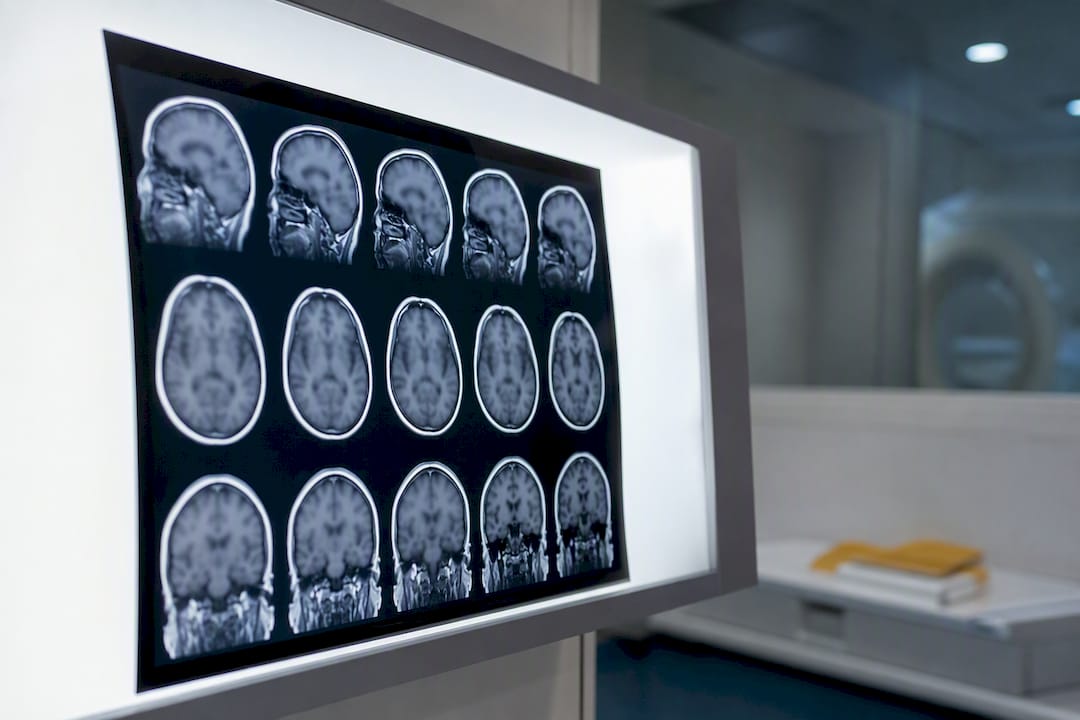
Neuroimaging carries its own wrinkle: MRI defacing and skull-stripping remove or blur facial structure that can be reconstructed into a recognizable face, a risk pixel PHI detection alone does not address. But defacing degrades diagnostic utility for anything involving facial or scalp pathology, so it belongs in a research pipeline, not a diagnostic one, and the decision should be modality-specific rather than blanket policy. Whole-slide imaging (DICOM-WSI) label images and overlay layers deserve the same scrutiny as radiology overlays. A slide scanner's label image frequently contains a printed specimen barcode or handwritten accession number, and pipelines that only process the main image plane will miss it entirely.
Building a Practical DICOM De-Identification Pipeline
Most working pipelines split into two parallel paths that converge before final output: a metadata rule engine that applies Annex E action codes tag by tag, and a pixel computer-vision path that handles OCR, NER, and redaction. Orchestration logic decides when a file needs both paths (nearly always) and when pixel review can be skipped (rarely, and only with strong modality-specific evidence that burned-in text never appears).
Several open-source building blocks show up repeatedly in practitioner pipelines:
- pydicom, a Python library for reading, editing, and writing DICOM headers, handles the metadata-editing layer for most custom pipelines.
- Tesseract and newer deep-learning OCR models extract text from localized pixel regions.
- Object detection and segmentation models (often fine-tuned convolutional networks) find candidate burned-in text regions before OCR runs.
- The MIDI benchmark, hosted through NCI's data resources, provides a synthetic dataset practitioners can use to test pipeline accuracy before touching real patient data.
Logging and batching decisions shape whether the pipeline survives contact with a real archive. Every file needs a per-tag change log, not just a pass/fail flag, and batch processing should checkpoint frequently enough that a crash midway through ten thousand studies does not force a full restart. Cloud processing scales elastically for burst workloads like a trial's initial data ingest; on-premises processing tends to win when institutional policy restricts PHI from ever leaving a controlled network, even transiently.
Model versioning matters as much as the models themselves. Pin the OCR and detection model versions used for each processing run, and re-run a fixed validation set whenever you upgrade either, since a model update that improves average accuracy can still introduce new blind spots on modalities it was not specifically tuned for.
Why Human Review Still Anchors De-Identification QA
No automated method reviewed in the MIDI project's evaluations achieved 100% PHI removal. That finding should shape your entire QA design: human review is not a backstop for an immature pipeline, it is a permanent feature of a mature one.
- Instrument every automated decision with a confidence score, not just a binary redact/keep flag, so reviewers can be routed to the cases that actually need judgment.
- Set a triage threshold where anything below a defined confidence level gets mandatory human eyes before release.
- Track missed-PHI rate and over-redaction rate separately on a sampled subset of processed studies each release cycle, since the two errors trade off against each other.
- Re-validate against a representative dataset periodically, not just at launch, because new scanner firmware and new overlay styles both drift over time.
- Log every audit finding with timestamp, reviewer, and resolution so re-validation has a paper trail.
Pro Tip: Track missed-PHI rate and over-redaction rate on the same dashboard. Teams that only measure one tend to "improve" by over-correcting on the other, quietly destroying image regions that held real diagnostic value.
Documenting and Packaging a Compliant De-Identified Dataset
A de-identified dataset without documentation is a liability disguised as a deliverable. Anyone receiving the data, whether a CRO, a repository curator, or an internal QA team, needs to know exactly what was done and why.
- Record the chosen confidentiality profile and any option flags (Clean Pixel Data, Clean Graphics) applied.
- Keep a complete tag-action log mapping every modified attribute to its action code.
- Document pixel-cleaning steps, including which model versions and confidence thresholds triggered redaction.
- Save sample audit results from the human-in-the-loop review, not just a pass/fail summary.
- Set explicit retention policy for original (pre-de-identification) files and any re-identification mapping keys, including who can access them and under what approval.
| Documentation item | Why it matters |
|---|---|
| Confidentiality profile used | Confirms which risk threshold the dataset was built for |
| Tag-action log | Makes every metadata change auditable and reversible in review |
| Model versions and thresholds | Lets future audits reproduce or re-check pixel-cleaning decisions |
| Mapping key access policy | Defines legal boundaries for any future re-identification |
Repositories that follow a grant-aligned diagnostic data delivery format expect this documentation bundled with the images themselves, not sent separately or omitted. Consent terms and institutional policy should govern how long any re-identification key survives, and that retention window belongs in writing before the first file is processed, not after a reviewer asks for it.
How Integrated Diagnostics Speeds Up Compliant Data Delivery
Assembling a de-identification pipeline from separate lab, radiology, and IT vendors multiplies handoffs, and every handoff is a place where documentation gets lost or a mapping key ends up in the wrong hands. Kohealth Labs runs laboratory and radiology diagnostics under a single contract, which means provenance tracking and de-identification method logging happen inside one accountable chain instead of across three vendor boundaries.
Fewer handoffs between labs, imaging, and data delivery means fewer places for a de-identification method code to get dropped, mismatched, or lost in translation between systems.
AI-driven deviation detection flags inconsistencies in incoming data early, which shrinks the pool of studies that need full manual QA and lets human reviewers focus on genuinely ambiguous cases rather than routine ones. That is the same triage logic that makes uncertainty-aware pixel review scale, applied across the full diagnostic data pipeline.
For CROs and trial sponsors, the deliverable is a bundle: de-identified imaging data with audit logs, method codes, and biomarker panels attached, ready for analysis rather than requiring another round of vendor reconciliation.

Starting a De-Identification Project: What I'd Prioritize First
Run a pilot before you scale. Pick one modality, inventory a representative sample, and process it through the full hybrid pipeline end to end, metadata rules, pixel detection, and human review, before committing to production volume.
Staffing is where most timelines slip. You need someone who actually understands DICOM tag structure, a computer vision or OCR engineer who can tune detection thresholds, and a legal or regulatory reviewer who signs off on the profile choice before data moves anywhere. Skipping the regulatory reviewer to save time is the single most common shortcut that comes back to bite teams during an audit.
Expect four to eight weeks for a solid pilot on one modality, and treat the jump to production as a separate project with its own validation pass, not an automatic extension of pilot code.
— Kohealth Labs
Key Takeaways for DICOM De-Identification
- The defensible approach combines rule-based metadata scrubbing, AI-assisted pixel detection, and human-in-the-loop review, since no automated method alone reaches complete PHI removal.
- Choose your Annex E confidentiality profile based on the data's destination and risk threshold, not a default "strictest possible" setting that destroys research value.
- Handle private and vendor-specific tags as high-risk by default, and remap UIDs consistently rather than deleting them outright.
- Instrument pixel detection with confidence scores so human reviewers spend time on ambiguous cases, not routine ones.
- Document the profile, tag-action log, model versions, and mapping-key policy before any dataset leaves your environment.