
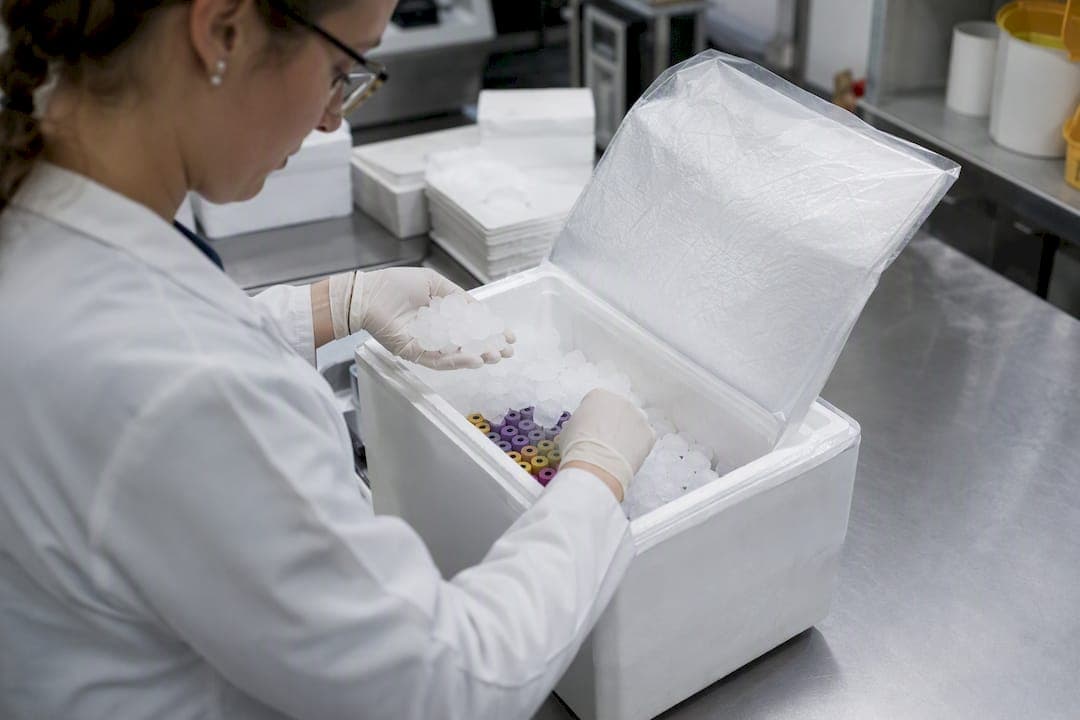
Yes, you can ship with dry ice, provided you pack it in vented, insulated packaging, mark it with the correct UN1845 designation and net weight in kilograms, and complete the documentation your carrier requires. Air shipments carry tighter limits than ground shipments, and anyone who signs shipping papers for dry ice must be trained. Clinical specimens qualify for narrow exceptions, but they still need precise marking and packaging to move legally.
TL;DR:
- Shipping dry ice requires vented, insulated packaging and correct hazard markings, with stricter limits on air shipments and mandatory training for handlers.
- Typically, 5 to 10 pounds of dry ice per 24 hours of transit is recommended, with additional buffer time for delays and environmental factors.
- Proper handling involves wearing protective gear, using ventilated containers, and avoiding airtight storage to prevent pressure buildup and injuries.
- Documents must clearly state the dry ice net weight in kilograms and display the UN1845 label to prevent shipment delays or rejections.
- Managed courier services offer validated packaging, continuous quality checks, and trained personnel to ensure compliance and safeguard specimen integrity.
What Is Dry Ice Shipping and Why Does It Require Special Handling?
Dry ice is solid carbon dioxide, and it never melts into liquid. It sublimates directly into CO2 gas, and that transition is exactly why shipping rules treat it as a hazardous material rather than an ordinary cooling agent.
Three risks drive the regulations:
- Pressure buildup: an airtight container trapping CO2 gas can bulge, burst, or become dangerous to open.
- Suffocation risk: CO2 displaces oxygen in enclosed spaces like cargo holds and delivery vans.
- Cold contact injury: dry ice sits at negative 109.3°F, and bare skin contact causes frostbite within seconds.
Federal rules under 49 CFR § 173.217 require packaging that lets CO2 gas escape without letting the box fail structurally. That single requirement, venting without weakening, shapes almost every packing decision that follows.
When Should You Use Dry Ice Instead of an Alternative?
Dry ice makes sense for goods that need to stay frozen solid, not just cold, over the full transit window. Frozen food, tissue samples, and temperature-sensitive biologics all fall into that category. Diagnostic specimens headed to a lab often need dry ice specifically because gel packs can't hold the required sub-zero range.
Alternatives are worth considering depending on your shipment:
- Gel packs work for refrigerated (not frozen) items and simplify documentation considerably.
- Validated refrigerated shippers suit repeat shipments where the cost of a reusable qualified container pays off over time.
- Commercial cold-chain services shift both liability and logistics complexity to a specialized carrier.
The trade-off usually comes down to transit time versus replenishment risk. A two-day shipment with a reliable receiver rarely needs the same buffer as a shipment crossing multiple time zones with an uncertain delivery window.
How Do You Source and Store Dry Ice Safely Before Packing?
Local welding supply stores, some grocery chains, and specialty gas distributors sell dry ice by the pound. Pellets pack more densely around irregular items, while blocks sublimate more slowly because they expose less surface area to warm air.
Handling and storage basics that prevent injuries and spoiled shipments:
- Wear insulated gloves and eye protection any time you're breaking, handling, or repacking dry ice.
- Transport it in a vehicle with airflow, never in a sealed trunk with no ventilation.
- Never store it in an airtight container, a freezer, or anywhere gas can't escape.
- Keep it in a ventilated cooler until you're ready to pack, and monitor how quickly it's sublimating so you can judge your available window.
Pro Tip: Weigh your dry ice right before sealing the box, not when you bought it. A block that sat in your cooler for six hours has already lost weight to sublimation, and that number is what you should record on your shipping label, not the purchase weight.
How Much Dry Ice Do You Actually Need?
Planning the right quantity means matching sublimation rate to transit time, not just guessing at a round number.
- Start with the baseline. Institutional shipping guides recommend 5 to 10 pounds (2.27 to 4.54 kilograms) per 24 hours of transit as a planning guideline.
- Adjust for your container. Low-density foam insulation, large empty voids inside the box, and thin walls all accelerate sublimation, sometimes dramatically compared to a well-fitted, high-density cooler.
- Account for environment and handling. Warm loading docks, direct sun exposure, and rough handling during transfers between carriers all increase gas loss beyond the baseline.
- Add a buffer. Build in at least an extra 24 hours of dry ice beyond your expected transit time to absorb weather delays, missed pickups, or rerouted flights.
- Confirm the pickup and delivery windows with your carrier before you finalize the amount, since a Friday afternoon pickup with weekend transit changes your math entirely.
How Do You Pack a Dry Ice Shipment Step by Step?
Good packing starts before the dry ice ever touches the box. Pre-chill your insulated container if possible, since a cooler that starts warm burns through dry ice faster in the first hour than at any other point in transit.
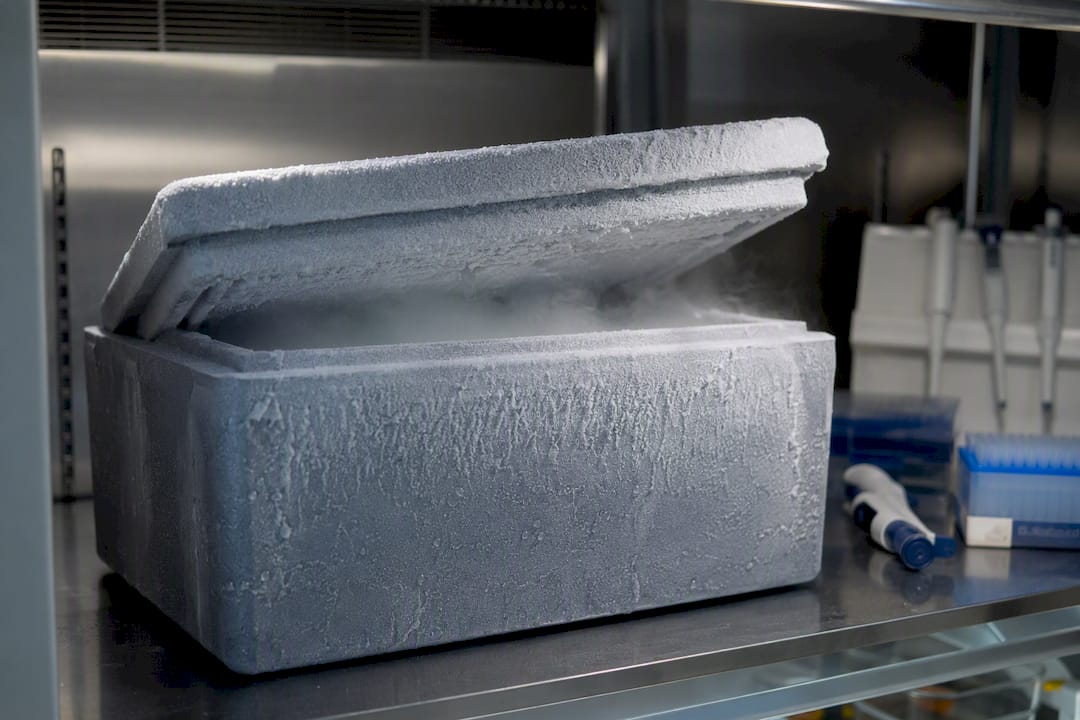
The general workflow looks like this: place your product in the container first, surround it with dry ice (not the reverse, since dry ice needs to be near the top for the coldest air to sink), fill remaining voids with cushioning material to stop shifting, and close the insulated liner before sealing the outer box.
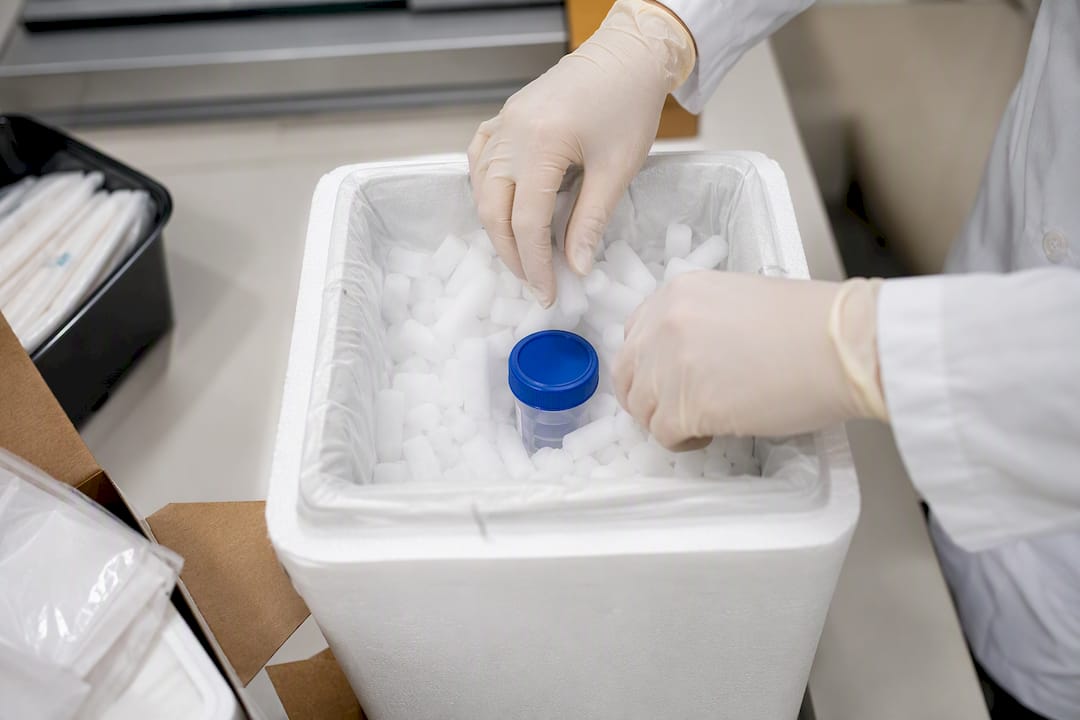
Venting is non-negotiable. Never tape a dry ice package airtight. Safety guidance from institutional EHS programs specifically flags over-sealing as a common and dangerous mistake, since a box that can't release CO2 gas can bulge or rupture in transit.
Clinical and biological specimens require an added layer of control known as triple packaging:
- A primary container that's leak-proof and holds the actual sample.
- A secondary container, also leak-proof, packed with absorbent material in case the primary container fails.
- A rigid outer box that holds the dry ice, the secondary container, and any documentation.
Pro Tip: Never write "specimens" alone on the outer box without the required hazard markings. Institutional guides flag this as a recurring error that gets shipments held or rejected at carrier acceptance, since the marking has to identify the hazard, not just the contents.
What Labels and Documents Does a Dry Ice Shipment Need?
Every compliant package needs the outer box marked with "Dry Ice" or "Carbon dioxide, solid," the UN number UN1845, and the net weight of the dry ice in kilograms, not pounds. Shipments over a certain threshold also require a Class 9 hazard diamond.
Small-quantity air exceptions allow limited amounts for excepted dry ice shipments, though the exact packaging and marking obligations still apply below that line.
Documentation requirements vary by mode:
- Air waybills need an entry showing "Carbon Dioxide, Solid" or "Dry Ice," the UN number, and net weight in kilograms.
- Ground shipments typically require correct box markings but less formal paperwork than air.
- Diagnostic and treatment specimens carry specific exceptions under 49 CFR § 173.217, but the marking and net weight requirements still apply regardless of the exception.
Getting the labeling right the first time avoids the single most common reason dry ice shipments get held at a carrier facility: illegible or missing net weight on the outer box. Kohealth Labs's sample labeling standards guide walks through the marking conventions labs use to avoid that exact problem.
What Carrier Rules and Training Requirements Apply?
Air and ground shipments play by different rulebooks, and assuming one carrier's process matches another's is how shipments get delayed.
- Air shipments demand more documentation, tighter quantity limits, and sometimes a signed agreement with the carrier before you can ship at all.
- Ground shipments within the contiguous U.S. are generally less restrictive, but correct labeling is still mandatory, not optional.
- Operator variations mean individual airlines or express services can set their own quantity caps or require International Shipper Contracts for cargo-only or international routes.
- USPS caps air transport at 5 pounds of dry ice per mailpiece, with larger quantities routed by surface only.
Signing a shipping paper for a dry ice package is a legal certification that the shipment complies with federal regulations, not a formality. University safety programs treat that signature as a compliance event, tracking who signed, when they were trained, and when that training expires.
Training typically needs renewal every two to three years depending on the organization's policy, and anyone signing paperwork without current training exposes the organization to real regulatory risk if a shipment is inspected. UPS's dry ice shipping guidance and FedEx's packing and labeling steps both spell out acceptance checks you can confirm before drop-off. For a deeper compliance breakdown of training records and shipping declarations, Labgistics's guide for compliance officers covers the documentation side in more detail.
How Does KoHealthLabs Handle Clinical Specimen Cold Chain?
Diagnostic and clinical trial specimens raise the stakes considerably. A frostbitten technician is a bad day. A degraded biomarker sample is a lost data point in a clinical trial, and that's a different order of problem entirely.
Kohealth Labs builds specimen logistics around validated, vented packaging and documented cold-chain standard operating procedures, the same principle behind 49 CFR § 173.217's venting requirement, applied with lab-grade consistency rather than case-by-case judgment.
- Managed pickups with trained couriers eliminate the mid-transit replenishment gaps that sink DIY shipments on multi-day routes.
- AI-enabled quality checks flag temperature or documentation deviations before they become chain-of-custody failures.
- Single-contract logistics across labs, radiology, and data delivery means one accountable partner instead of four vendors pointing at each other when something goes wrong.
For research sponsors and CROs running multi-site trials, integrated diagnostics including labs, radiology and data accelerates clinical trials by cutting the handoffs where samples typically get delayed or degraded. Kohealth Labs's specimen cold chain guide breaks down the validated packaging standards behind that reliability.
Final Checklist Before You Hand a Package to a Carrier
Before sealing anything, I run through five checks: net weight recorded in kilograms, UN1845 and hazard markings clearly visible, the box vented rather than airtight, the recipient confirmed as available to receive it, and the carrier's acceptance requirements verified for that specific route.
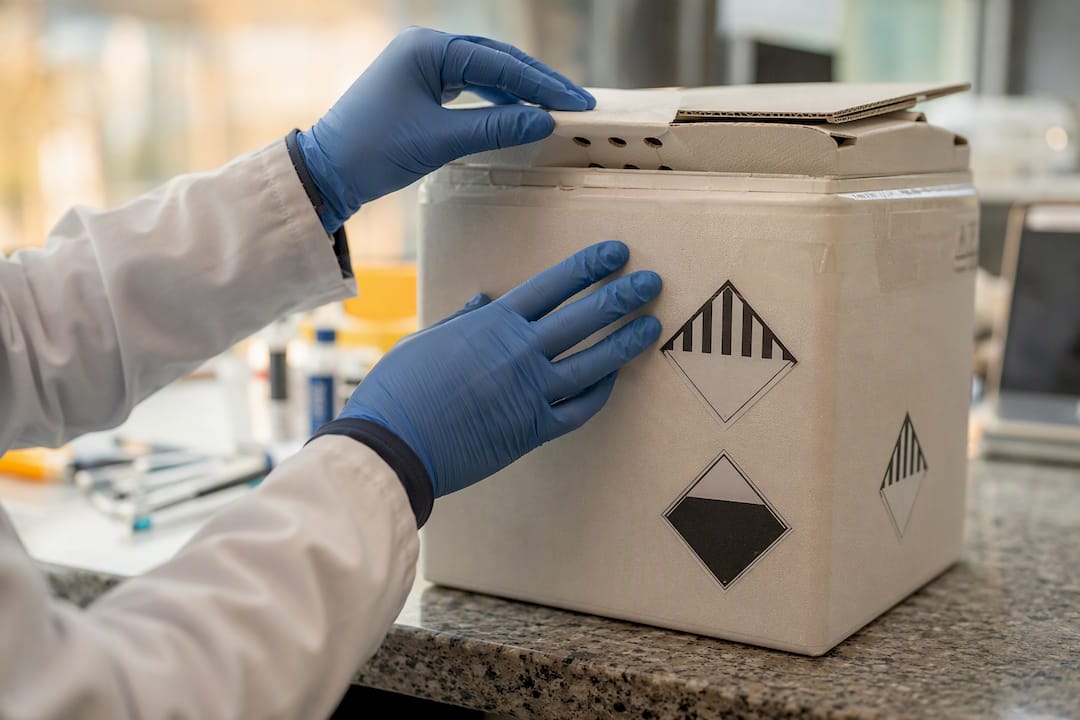
If any single item fails, the shipment isn't ready. Delay it, fix the gap, or hand it to a managed courier service built for exactly this problem.
Skip the Guesswork With Managed Specimen Logistics
Kohealth Labs is the alternative to piecing together dry ice compliance yourself for clinical and diagnostic specimens, one accountable partner handling pickup, validated packaging, and documentation instead of your team tracking training renewals and carrier variations on top of everything else.

Every specimen that moves through Kohealth Labs's network travels in validated, vented packaging built to the same standards outlined in 49 CFR § 173.217, with trained couriers handling pickup so your team isn't the one signing shipping papers under time pressure. AI-driven quality checks flag temperature or documentation deviations in real time, catching problems before they reach the lab instead of after. That combination, integrated diagnostics spanning labs, radiology, and data, is what shortens the distance between a specimen leaving a site and a usable, analysis-ready result landing in a trial sponsor's hands.
If your organization ships diagnostic or research specimens regularly, explore Kohealth Labs's pathology and specimen logistics services to see how a single-contract model replaces the vendor juggling most labs currently accept as normal.
This article is general information, not a substitute for advice from a qualified lawyer. Consult a qualified legal professional about your own circumstances before acting on anything here.