

Adopt a standards-first FHIR bundle pipeline paired with a unified data layer to deliver analysis-ready diagnostic bundles across your polyclinic network. This is the fastest, lowest-risk route to consistent multi-clinic reporting, and it beats patching together spreadsheets, PDFs, and one-off exports from each site's electronic medical record.
Structured data bundles polyclinic reporting starts with HL7 FHIR Bundles, the resource type that packages a Composition, DiagnosticReport, and Observation entries into one validated payload your team can move between clinics, registries, and sponsors without re-keying anything. Get this piece right and everything downstream, from duplicate-test reduction to regulatory exports, gets easier.
Your immediate next step is narrower than it sounds:
- Pick one high-volume encounter type (say, a lipid panel plus a chest X-ray) and map its source fields to LOINC and SNOMED-CT codes.
- Assemble a small pilot batch of bundles and run them against a public-health reporting bundle profile's conformance rules.
- Set a validation target (95% pass rate is a reasonable pilot bar) before you scale to a second clinic.
For organizations that want to skip months of internal build work, KoHealthLabs offers an integrated lab-and-radiology path that arrives closer to analysis-ready by design, which we cover in more depth below.
Key Takeaways
Structured data bundles built on FHIR profiles and a unified data layer are what let polyclinic networks report consistently across sites without re-keying data at every clinic.
| Point | Details |
|---|---|
| Standards first | Map fields to LOINC, SNOMED-CT, and USCDI before building your bundle assembler. |
| Pick the right bundle type | Use document bundles for finalized reports and message bundles for event-driven registry alerts. |
| Validate continuously | Target a 95% first-pass conformance rate against bdl-* constraints during your pilot. |
| Capture at the source | Redesign intake templates per specialty to stop free-text leakage before it starts. |
| Consider an integrated vendor | Kohealth Labs offers single-contract lab and radiology services with AI-driven validation for analysis-ready bundles. |
Why Structured Data Bundles Matter for Polyclinic Networks
A polyclinic running five specialties on five different intake forms is really running five separate data problems that happen to share a parking lot. Structured data bundles solve this by giving every clinic the same container for results, no matter which EMR, lab information system, or imaging modality generated the data.
Centralized reporting is the first payoff. When every site outputs the same bundle shape, your reporting layer stops waiting on manual reconciliation and starts querying a single, consistent structure. Duplicate testing drops because a bundle carries the patient's recent lab and imaging history in a form the next clinician can actually read, not a scanned PDF buried in a referral packet. Unified data layers that consolidate diagnostics at the point of care produce measurably better reporting outcomes for networks running more than two sites, because the integration work happens once instead of once per clinic.
A quick illustration: a patient gets a metabolic panel at Clinic A on Monday and a follow-up ultrasound at Clinic B on Thursday. With bundled reporting, both results land in one Composition tied to the same encounter context, complete with LOINC-coded lab values and a structured DiagnosticReport for imaging. Without it, Clinic B's radiologist often can't see Monday's labs at all, so the panel gets reordered.
The clinical and safety case matters just as much as the operational one:
- Audit trails become queryable instead of buried in free-text notes, which matters the moment a regulator or accreditor asks for a chain of custody on a result.
- Decision support tools work correctly only when the underlying data is coded consistently, so a bundle-first approach is what actually makes clinical alerting reliable across sites.
- Registry exports stop being a special project. A properly assembled bundle can feed a state or federal registry submission with minimal reformatting.
Statistic callout: Good Practice in Health Reporting identifies detailed planning for data acquisition, plausibility testing, and coding as the central determinant of whether a reporting system produces trustworthy output. Skip that planning step and no amount of software fixes the downstream mess.
What Standards and Bundle Profiles Should You Use?
You don't need to invent a data model. The standards already exist, and using the wrong one is usually more expensive to fix later than picking the right one up front.
Bundle types come first. FHIR defines several bundle types, and picking the correct one for each use case avoids a lot of downstream pain. A document bundle is best for a finalized, signed clinical report, such as a discharge summary or a completed diagnostic panel, because it locks the content. A message bundle suits event-driven exchanges, like notifying a registry the moment a reportable result posts. A collection bundle works for looser groupings, such as a batch export for analytics. Treating "Bundle" as a formal resource type rather than a generic wrapper matters here: choosing document when you needed message (or vice versa) tends to produce validation failures the first time an external registry or consumer tries to ingest your feed.
Public-health and surveillance profiles are already defined. The NHSN measureReport bundle from CDC specifies exact structural requirements, including a patient-of-interest list, a subject list, and individual MeasureReport entries, with Composition required as the first resource. HL7's US Public Health Reporting Bundle profile lays out comparable constraints for registries and public-health submissions generally, including slicing rules that dictate exactly which resource types must appear and in what order.
Terminology mapping is not optional. Every lab result needs a LOINC code, every clinical finding needs a SNOMED-CT code, and every core demographic or clinical field should trace back to the USCDI element list so your bundles stay exchange-ready under frameworks like TEFCA.
Transparency principles round it out. WHO's GATHER guidance sets an 18-item checklist for reporting health estimates transparently, including documentation of input data and estimation methods. Polyclinic networks reporting aggregate measures to public-health bodies benefit from applying the same discipline internally.
| Profile / standard | What it governs | Where it applies |
|---|---|---|
| FHIR Bundle (document/message/collection) | Structural container type | Choosing how a report moves between systems |
| NHSN measureReport bundle | Surveillance measure structure | Public-health measure submissions |
| US Public Health Reporting Bundle | Registry submission constraints | Reportable condition exports |
| LOINC / SNOMED-CT | Terminology coding | Lab results and clinical findings |
| USCDI | Core exchange data elements | Demographic and clinical field mapping |
Validation constraints, often labeled bdl-* rules in these profiles, enforce things like "exactly one Composition" and "at least one DiagnosticReport entry." Build your validator against these constraints from day one rather than discovering them when a registry rejects your first submission.
How Should Your Multi-Clinic Data Architecture Be Structured?
The architecture that works for polyclinic reporting has six layers, and skipping any one of them is where most implementations stall.
- Source connectors. Build direct capture-at-source connections to each clinic's EMR, lab information system (LIS), and radiology information system (RIS). Capturing data at the point of origin, rather than reconstructing it later from exports, is what keeps free-text leakage out of your structured fields.
- Transformation and terminology service. A dedicated mapping layer converts local codes into LOINC, SNOMED-CT, and USCDI-aligned fields. Centralizing this logic once, rather than duplicating it in every clinic's local system, is the single biggest maintenance saver in a multi-site rollout.
- Bundle assembler. This component selects the correct bundle type and assembles the required entries, Composition, DiagnosticReport, Observation lists, and any patient-of-interest or subject lists a given profile demands.
- Validation and automated QA. Every bundle should pass schema checks, profile-level constraint checks (the bdl-* rules), and business-rule tests before it moves downstream. Continuous conformance monitoring catches drift when a clinic upgrades its EMR and quietly changes an export format.
- Storage. Most networks need two stores: a transactional FHIR store for operational queries and an analytics warehouse for longitudinal reporting and registry exports. Access controls need to be role-based from the start, not bolted on later.
- Presentation layer. Role-based dashboards, automated registry export jobs, and immutable audit logs sit on top. This is the layer clinical leadership actually sees, so its accuracy depends entirely on everything upstream being validated correctly.
Health reporting research backs a point worth internalizing here: there's no one-size-fits-all blueprint for reporting architecture. The right design depends on which clinical or policy decisions the data needs to support, so define those decisions before you finalize your schema, not after.
Pro Tip: Build your terminology mapping table before you touch your bundle assembler. Teams that map LOINC and SNOMED-CT codes retroactively spend far more time reconciling mismatched fields than teams that map at the point of EMR integration.
A unified data layer that sits between your source systems and your reporting layer is what makes steps two through five sustainable across more than a handful of clinics. Without it, every new site adds its own translation logic, and the whole system becomes harder to audit with each addition.
What Does an Implementation Checklist Look Like in Practice?
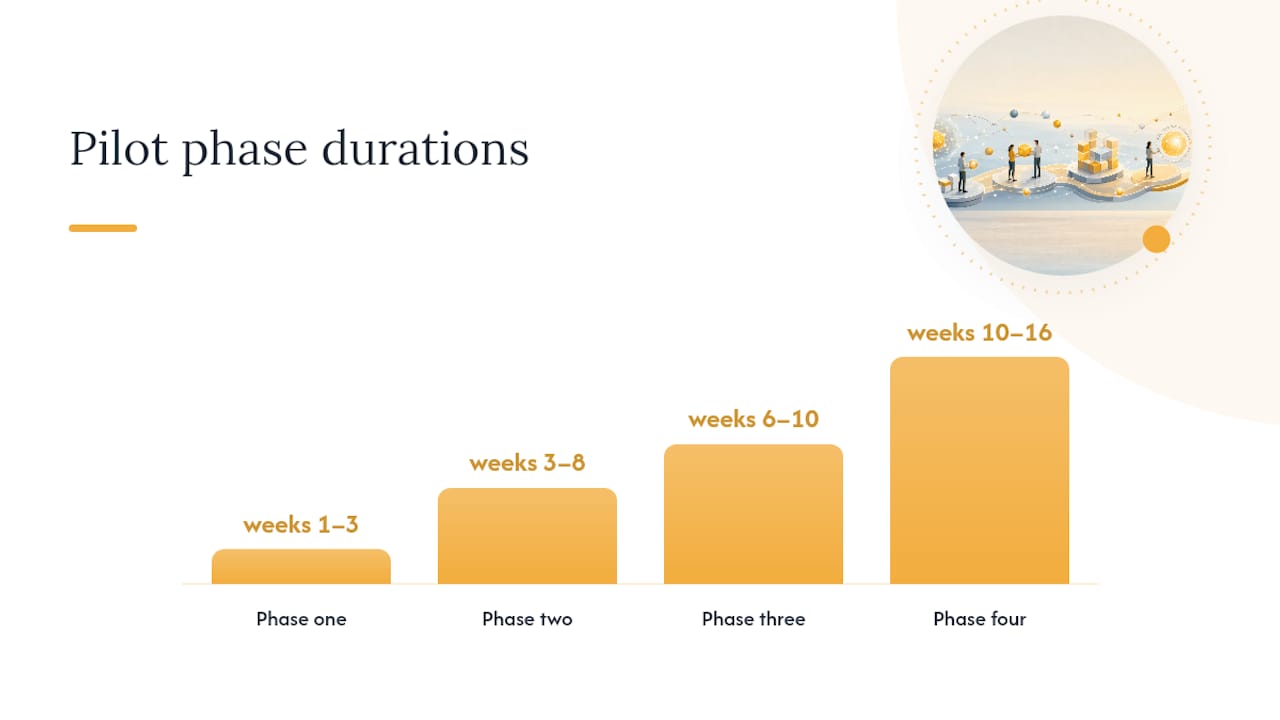
Turning the architecture above into a working pilot requires sequencing. Here's the order that tends to hold up across real deployments.
Phase one: governance and alignment (weeks one through three).
- Name a clinical champion, an informatics lead, and representatives from lab and imaging who can commit real time, not just attend meetings.
- Loop in compliance early. Reporting bundles that touch public-health submissions carry regulatory weight from day one, not after go-live.
- Define the pilot's measurable KPI. A common starting target: the percentage of lab results delivered as validated, conformant bundles within 24 hours of result finalization.
Phase two: data capture and mapping (weeks three through eight).
- Redesign intake templates per specialty so structured fields, not free text, capture the data you need. Free-text leakage at the point of capture is the single most common reason bundle mapping projects run over budget.
- Build and test your LOINC and SNOMED-CT mapping tables against real historical data from at least two clinics, not just one, since coding gaps often surface only when a second site's local codes don't match the first.
- Document every mapping decision. Good Practice in Health Reporting treats this documentation step as central to producing a trustworthy reporting system, not an optional appendix.
Phase three: assembly and validation (weeks six through ten, overlapping with phase two).
- Configure your bundle assembler for the chosen profile (document bundle for finalized reports, message bundle for event-driven registry alerts).
- Write automated test cases at two levels: unit tests that check individual field mappings, and end-to-end tests that run a full encounter through capture, mapping, assembly, and validation.
- Set your conformance target before the pilot starts. A workable benchmark is a high first-pass validation rate against the relevant bdl-* constraints, with a defined remediation path for any remaining validation issues.
Phase four: pilot execution and scale (weeks ten through sixteen).
- Run the pilot on a defined sample volume, commonly 200 to 500 encounters, across two clinics before expanding further.
- Track your KPI weekly, not monthly. Bundle pipelines tend to fail quietly, and a monthly review window lets a broken mapping run for far too long.
- Once validation rates hold steady for two consecutive weeks, expand to a third clinic and hand operational ownership to the informatics team, with the original clinical champion staying on as an escalation point.
Budget planning should account for terminology licensing, integration engineering time, and a validation/QA function that doesn't disappear after go-live. Networks that treat validation as a one-time launch task, rather than an ongoing pipeline, are the ones that end up re-running this whole checklist eighteen months later.
How KoHealthLabs Delivers Analysis-Ready Diagnostic Bundles
Building the pipeline above in-house is entirely possible, but it takes real engineering time most polyclinic IT teams don't have spare. Kohealth Labs built its model around exactly this gap.
A single-contract structure covering both laboratory and radiology services removes one of the biggest sources of delay in multi-vendor diagnostics: reconciling data formats between separate lab and imaging suppliers. Kohealth Labs applies AI-driven deviation detection during processing, flagging inconsistent or out-of-range results before they reach your bundle assembler, which shortens the compliance review cycle considerably.

Operationally, the offering includes a provider portal for order and result management, courier-based specimen logistics, dedicated onboarding and training for staff, and EMR connectors designed to plug into the architecture described above rather than compete with it.
If you're evaluating vendors for this kind of engagement, ask for these specifics before signing anything:
- A sample bundle output, ideally from a comparable specialty mix to yours.
- A validation report showing conformance rates against the relevant profile constraints.
- A documented onboarding timeline with named milestones.
- A clear pricing model tied to test volume, not a vague enterprise quote.
Pro Tip: Request the sample bundle before the sales call, not during it. A vendor's real conformance rate shows up in the file, not in the pitch.
What Most Polyclinic Data Projects Get Wrong
The conventional advice on this topic treats standards compliance as a compliance checkbox: map the fields, pass the validator, move on. That framing misses the actual lesson from the research behind this guide, which is that reporting architecture has to be built around the clinical or policy decisions it needs to support, not the other way around.
Most stalled implementations we've studied didn't fail because a team picked the wrong LOINC code. They failed because nobody defined what decision the bundle was supposed to enable before building it, so the pipeline became a data-hoarding exercise instead of a reporting tool anyone actually used.
If you're starting from scratch, prioritize one thing above all else: pick a single, concrete use case (a registry submission, a duplicate-test reduction target, a specific safety alert) and build your first bundle pipeline around that decision. Everything else, terminology mapping, validation thresholds, architecture layers, follows naturally once the target is real instead of abstract.
Get Analysis-Ready Bundles Without Managing Five Vendors
Kohealth Labs removes the vendor-juggling problem entirely: instead of contracting a lab, a radiology group, and a data integration firm separately, you sign one contract that delivers analysis-ready lab and imaging bundles built for the exact standards this guide covers.
That single-contract structure is the concrete advantage over piecing together your own pipeline. AI-driven deviation detection flags data quality issues before they hit your reporting layer, and the analytics platform covers more than 100 biomarkers, so your terminology mapping work starts from a foundation that's already coded, not raw lab exports you have to map yourself. Integrated diagnostics also give specialty clinics a faster path to bundled imaging data without building a separate radiology integration from scratch.
For clinical research organizations and multi-clinic networks running trials or population health programs, this is what accelerates timelines: fewer vendor handoffs mean fewer places for a bundle to break before it reaches your reporting pipeline. Request a sample bundle and review Kohealth Labs's integrated diagnostics solutions to see how the onboarding timeline fits your pilot schedule.
Frequently Asked Questions
What are structured data bundles in polyclinic reporting?
They're standardized FHIR containers, typically built around a Composition and one or more DiagnosticReport or Observation entries, that package lab and imaging results into a consistent, machine-readable format so every clinic in a network reports the same way.
Which FHIR bundle type should a polyclinic use for lab results?
A document bundle suits finalized, signed lab reports because it locks the content once complete. A message bundle fits event-driven use cases, such as alerting a registry the instant a reportable result posts.
Do we need LOINC and SNOMED-CT for every result?
Yes for structured reporting to work reliably. LOINC codes lab tests, SNOMED-CT codes clinical findings, and skipping either one forces manual reconciliation downstream that undermines the entire point of bundling.
How long does a polyclinic bundle reporting pilot typically take?
Most pilots run twelve to sixteen weeks from governance kickoff to a stable, validated pipeline across two clinics, based on the phased checklist outlined earlier in this guide.
Can an outside vendor handle the whole bundle pipeline?
Yes. Vendors like Kohealth Labs combine lab and radiology data collection with AI-driven validation to deliver bundles closer to analysis-ready, which reduces the internal engineering lift compared to building the full pipeline from source connectors up.