

Radiology lab integration is the process of connecting imaging and laboratory data systems into a single, unified workflow to accelerate clinical trial timelines and improve data accuracy. This integration directly addresses the most common causes of trial delay: manual data transfers, siloed reporting, and late-stage reconciliation errors. Clinical trial coordinators and CRO stakeholders who rely on separate imaging and lab vendors face compounding delays at every handoff point. Integrated diagnostic frameworks, including those offered by Kohealth Labs, replace those handoffs with automated pipelines that keep enrollment decisions moving and data clean from day one. The result is faster trials, fewer queries, and stronger oversight across every site.
Why radiology lab integration speeds trials: the core mechanism
The fundamental reason radiology lab integration accelerates trials is automation. When imaging systems and laboratory information systems share a common data model, results move without human intervention. Automated data transfers replace manual copy-paste workflows, improving data integrity and cutting turnaround times significantly. That shift alone removes one of the most persistent bottlenecks in multi-site trials.
Manual workflows create compounding delays. A radiologist reads a scan, a coordinator transcribes the result, a data manager checks it against lab values, and a query goes out if anything mismatches. Each step adds days. Integrated platforms collapse that chain into a single background process that runs continuously and flags exceptions in real time.
Integrated diagnostic frameworks improve accuracy by minimizing errors, reducing delays, and supporting real-time decision-making through interdisciplinary collaboration. That means enrollment decisions based on imaging endpoints no longer wait for lab results to arrive by email. Both data sets are available simultaneously, in the same system, with the same timestamp.
Common manual bottlenecks that integration eliminates
- Fax or email transfers of imaging reports to central labs
- Manual re-entry of lab values into electronic data capture systems
- Delayed query resolution caused by mismatched data formats
- Separate audit trails for imaging and lab data that must be reconciled at database lock
- Site coordinators chasing missing results from independent vendors
Pro Tip: Start your data reconciliation plan before the trial begins, not at database lock. Integration removes most reconciliation tasks, but only if your data model is defined upfront. Waiting until the end to discover format mismatches costs weeks.
How technology is accelerating imaging data collection in trials
AI and machine learning now play a direct role in reducing image analysis time. Integrated platforms reduce image analysis review times by 50% or more, enabling faster enrollment decisions and keeping trials on schedule. One sponsor achieved three times faster image analysis with significant cost savings using this approach. That is not a marginal gain. It changes the pace of the entire trial.

Cloud-native platforms with pre-connected global site networks take this further. Automated zero-click data pipelines can begin data collection weeks or months earlier by bypassing traditional setup delays. These platforms operate across networks of over 300 pre-connected sites globally. That scale means a trial can activate imaging at dozens of sites simultaneously, without waiting for individual vendor contracts.
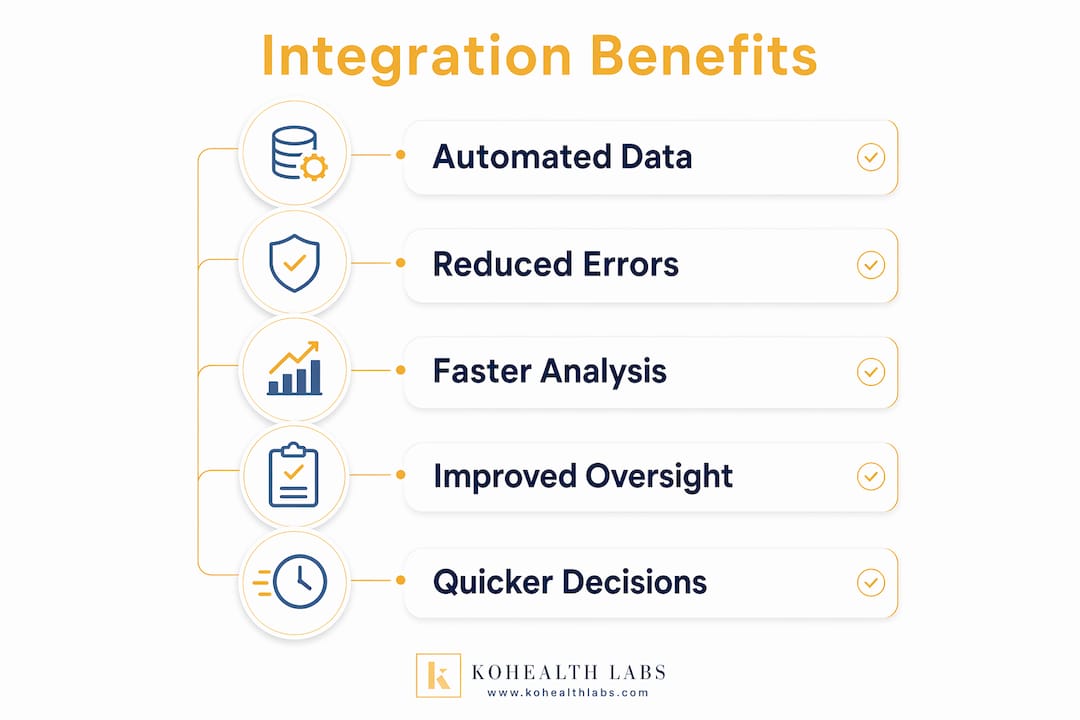
Real-time quality control is another measurable advantage. When imaging data flows directly into a shared system, quality checks run automatically against predefined parameters. Deviations trigger alerts immediately rather than surfacing during a quarterly data review. That speed of detection protects both data integrity and participant safety.
| Approach | Data transfer | Query detection | Setup time |
|---|---|---|---|
| Traditional (separate vendors) | Manual, batch | End-of-period review | Weeks to months per site |
| Integrated platform | Automated, continuous | Real-time | Days with pre-connected sites |
Pro Tip: When evaluating imaging platforms, ask specifically about pre-existing legal and privacy agreements at their site network. Pre-existing site agreements allow many trials to skip lengthy contract negotiations entirely, cutting startup time by weeks.
How unified data models improve trial oversight and decisions
A unified clinical, radiology, and laboratory data model eliminates the single biggest source of trial inefficiency: the data silo. When imaging results live in one system and lab values live in another, coordinators spend significant time reconciling records that should never have been separated. Integration breaks down data silos so that radiology and laboratory data serve as longitudinal patient records throughout the trial. That continuity is what makes real-time oversight possible.
Missing data identification is one of the clearest operational benefits. Immediate identification of missing data is critical for real-time trial oversight. In a fragmented system, a missing lab result may not surface until a data manager runs a monthly report. In an integrated system, the gap appears the moment the expected result fails to arrive. That difference in detection speed directly reduces query volume at database lock.
The table below shows how unified data models change operational outcomes across key trial functions.
| Trial function | Fragmented approach | Unified data model |
|---|---|---|
| Enrollment decisions | Delayed pending manual result review | Real-time, based on live imaging and lab data |
| Query volume | High, concentrated at database lock | Low, distributed and resolved in real time |
| Patient tracking | Separate records per modality | Single longitudinal record per participant |
| Multi-site oversight | Manual aggregation required | Centralized dashboard with live data |
For complex multi-site trials, the operational advantage compounds. Sponsors overseeing 50 or more sites cannot manually track data completeness across independent imaging and lab vendors. A unified model gives medical monitors a single view of every participant's status, across every site, without waiting for weekly data transfers. That visibility supports faster protocol amendments, safety reviews, and go/no-go decisions.
You can explore how unified diagnostics in clinical research work in practice to see how this model applies across different trial phases and endpoint types.
What to watch for when implementing radiology lab integration
Integration is not a plug-and-play process. The technical setup requires configuring edge gateways that connect Picture Archiving and Communication Systems (PACS) or Laboratory Information Systems (LIS) to the central platform. This technical handshake configuration requires upfront time, but pre-existing agreements at integrated platform sites allow faster trial starts than typical vendor onboarding. The investment is real, but the payoff begins at site activation.
The most common implementation mistake is treating integration as a purely IT task. Viewing integration as only an IT project jeopardizes success. Radiologists and lab experts must be part of protocol design to produce clinically relevant endpoint data. A system that is technically functional but clinically misaligned will generate valid data that answers the wrong questions.
Human workflow alignment matters as much as technical configuration. Coordinators at each site need to understand how automated pipelines interact with their daily tasks. If a coordinator continues to manually log results that the system already captures automatically, duplicate entries and reconciliation errors follow.
Common pitfalls to address before go-live:
- Failing to define data standards (units, reference ranges, image formats) before site activation
- Excluding radiologists from endpoint definition discussions
- Underestimating training time for site staff unfamiliar with integrated systems
- Assuming pre-connected sites require no local configuration
- Skipping a pilot phase at one or two sites before full rollout
Pro Tip: Involve your lead radiologist and lab director in protocol design meetings from the first session, not after the protocol is drafted. Their input on imaging windows, sample timing, and result thresholds prevents costly amendments later.
Integrated radiology in study design requires this kind of cross-functional planning to deliver on its speed and accuracy promise.
Key Takeaways
Radiology lab integration speeds trials by replacing manual data handoffs with automated, unified workflows that reduce errors, cut query volume, and enable real-time oversight from enrollment through database lock.
| Point | Details |
|---|---|
| Automation cuts turnaround time | Automated pipelines replace manual transfers, reducing errors and accelerating data availability at every trial stage. |
| AI reduces image review time | Integrated AI-assisted platforms cut image analysis review time by 50% or more, speeding enrollment decisions. |
| Unified data eliminates silos | A single data model gives coordinators real-time visibility into imaging and lab results across all sites. |
| Early setup pays off | Upfront technical configuration and pre-existing site agreements reduce trial startup time significantly. |
| Human alignment is non-negotiable | Radiologists and lab experts must join protocol design early to produce clinically valid endpoint data. |
Kohealth Labs' view on integration as an operational necessity
We have worked with CROs and sponsors long enough to know that the conversation around integration has changed. A few years ago, teams asked whether integration was worth the setup complexity. Now the question is how fast they can get it in place. Integration has evolved from a technical upgrade to an operational necessity for organizations handling large data volumes, with automation and standardized measurements separating high-performing trials from delayed ones.
What we observe consistently is that the teams who struggle with integration are not struggling with the technology. They are struggling with the organizational assumption that data systems are someone else's problem. Coordinators own the protocol. Radiologists own the images. Lab directors own the samples. Nobody owns the connection between them, and that gap is where trials lose weeks.
The hidden benefit of integration that rarely gets discussed is what it does to team morale. When coordinators are not chasing missing results or manually reconciling records, they focus on participant care and protocol adherence. That shift in attention improves both data quality and site retention across long trials.
Our advice to any coordinator or stakeholder evaluating integration in 2026: do not measure success by whether the system works technically. Measure it by whether your team stopped doing tasks that the system now handles automatically. That is the real indicator of a successful implementation.
— Kohealth Labs
Kohealth Labs: integrated diagnostics built for trial speed
Clinical trial coordinators who want faster timelines and cleaner data need a diagnostic partner that connects imaging and laboratory workflows from the start.
Kohealth Labs delivers integrated clinical diagnostics designed specifically for CROs, pharma sponsors, and government research programs. The single-contract model unifies laboratory services and radiology under one agreement, removing the vendor coordination burden that slows trial startup. AI-assisted quality control identifies data deviations in real time, and analytics covering over 100 biomarkers give your team analysis-ready data bundles at every milestone. If your current setup still relies on manual transfers or separate imaging and lab vendors, Kohealth Labs offers a direct path to faster, more reliable trial execution. Visit kohealthlabs.com to see how integrated diagnostics fit your next trial.
FAQ
What is radiology lab integration in clinical trials?
Radiology lab integration connects imaging systems and laboratory data platforms into a unified workflow, automating data transfers and enabling real-time oversight across trial sites.
How does lab integration reduce trial delays?
Integration replaces manual data handoffs with automated background processes, eliminating transcription errors and enabling immediate identification of missing data before it becomes a query at database lock.
How much faster is image analysis with an integrated platform?
Integrated platforms reduce image analysis review times by 50% or more, with some sponsors reporting three times faster analysis compared to traditional workflows.
What is the biggest implementation risk for radiology lab integration?
Treating integration as a purely IT task is the most common risk. Radiologists and lab experts must participate in protocol design to produce clinically relevant endpoint data, not just technically valid outputs.
Can integration speed up trial startup as well as data collection?
Yes. Platforms with pre-existing legal and privacy agreements at their site networks allow trials to skip lengthy contract negotiations, starting data collection weeks or months earlier than traditional vendor onboarding allows.