
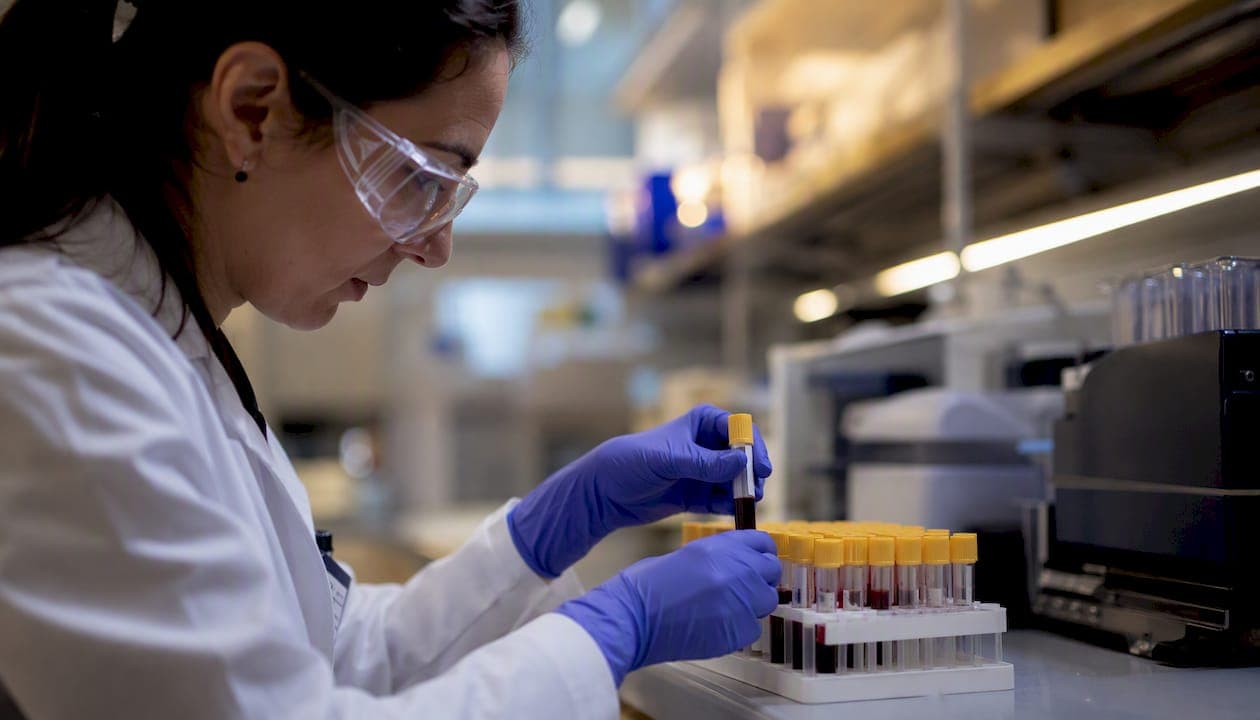
Biotech laboratory services cover the full spectrum of testing, analysis, and sample handling that sponsors, CROs, and research programs need to move from hypothesis to regulatory submission. At their core, these services transform biological specimens into validated, decision-ready data. The major service categories you'll encounter include:
- Analytical testing (chemistry, hematology, immunology)
- Sample logistics (phlebotomy, courier pickup, chain of custody)
- Genomics and sequencing (NGS, targeted panels, qPCR)
- Biologics testing (cell banks, lot release, potency assays)
- GMP/cGMP-support services (method validation, batch documentation)
- Integrated data delivery (LIMS exports, analysis-ready bundles, EMR integration)
Your first practical step: request a provider's scope of services document, current accreditation certificates, and sample-handling SOP before any technical discussion begins.
Key Takeaways
Integrated biotech laboratory services, combining validated testing, regulatory-aligned data delivery, and radiology under a single contract, represent the most efficient path to analysis-ready data for clinical trials and sponsor programs.
| Point | Details |
|---|---|
| Request accreditations first | Ask for CLIA, GLP, ISO 17025, and cGMP certificates before any technical discussion. |
| Prioritize data delivery format | Confirm the lab supports structured exports (CSV, JSON, HL7/FHIR) and API integration, not just PDF reports. |
| Match the platform to the assay | NGS for broad discovery, qPCR for speed and quantitation, mass spec for bioanalysis — each has a defined tradeoff. |
| Integrated delivery reduces queries | Combined lab and imaging data with shared identifiers cuts reconciliation time and speeds safety reviews. |
| Kohealth Labs | Single-contract integrated diagnostics covering 100+ biomarkers, radiology, and AI-driven analysis-ready data bundles for CROs and sponsors. |
What a biotechnology laboratory is and who uses these services
A biotechnology laboratory is a regulated facility that applies biological, chemical, and molecular techniques to generate data supporting R&D decisions, regulatory filings, and clinical trial safety monitoring. The lab's core job is to receive specimens, apply validated methods, and return results that sponsors and researchers can act on with confidence.
The organizations that rely most heavily on these services are CROs managing multi-site trials, pharmaceutical and biotech R&D teams running preclinical and Phase I–III studies, government health programs conducting population-level diagnostics, clinical operations teams processing safety samples, and telehealth or wellness platforms that need fast, structured lab data to support patient care decisions.
One factor reshaping how these buyers procure services is the shift toward integrated diagnostics, where laboratory testing, radiology, and AI-driven data delivery are bundled under a single contract. When lab panels and imaging arrive harmonized and analysis-ready, trial teams reach decision points faster and spend less time resolving cross-vendor data discrepancies. That integration model is now a meaningful differentiator when evaluating clinical laboratory solutions.
Core infrastructure inside a biotech lab: what to look for
Understanding what sits behind a lab's service menu helps you assess whether a provider can actually handle your project. The physical and operational infrastructure breaks down into two main environments.
Core physical spaces:
- Wet lab — where biological and chemical work happens: cell culture, sample prep, reagent handling, and assay execution
- Dry lab — computational and data-analysis space for bioinformatics, sequencing data processing, and statistical analysis
- Sample storage and cold chain — controlled-temperature freezers (–20°C, –80°C, liquid nitrogen) for specimen integrity over time
- Biosafety cabinets and containment areas — required for any work with infectious agents or human-derived materials
- BSL classifications — BSL-1 handles non-pathogenic organisms; BSL-2 covers most clinical specimens; BSL-3 is required for select agents; BSL-4 is for the highest-risk pathogens and is rare in commercial settings
Common equipment to expect:
- Next-generation sequencing (NGS) platforms for genomic and transcriptomic work
- qPCR and ddPCR instruments for quantitative nucleic acid detection
- Mass spectrometers for metabolomics, proteomics, and small-molecule analysis
- ELISA readers and automated immunoassay platforms
- Flow cytometers for cell phenotyping and functional assays
- Automated liquid handlers for high-throughput sample processing
The University of Houston's biotechnology research facilities illustrate how academic programs structure wet/dry lab access and shared instrumentation, a model that commercial labs have largely adopted for core facility services.
Pro Tip: During a site visit or virtual due diligence, ask to see the instrument calibration logs and the most recent preventive maintenance records for any platform central to your project. A lab that can produce those records within minutes has a functional QA culture; one that needs days to locate them is a warning sign.
Common biotech laboratory services and how each fits a project
Knowing which service type maps to which project phase saves time during vendor scoping. Here is a practical run-through of the services you'll most often encounter.
Analytical testing covers routine chemistry, hematology, coagulation, and urinalysis panels. Sponsors buy this for safety monitoring throughout a trial, and the deliverable is a structured results file tied to each subject visit.
Assay development and validation is the process of building and qualifying a custom measurement method to regulatory standards (typically ICH Q2(R1) for bioanalytical work). Teams need this when no commercial kit exists for their target analyte, and the deliverable is a full validation report with precision, accuracy, and stability data.
Sequencing and genomics services range from whole-genome sequencing to targeted gene panels and RNA-seq. NGS is the standard platform for most genomic work; molecular diagnostics approaches like qPCR remain the choice when speed and quantitative precision matter more than breadth.
Biologics testing includes cell bank characterization, lot release testing, and potency assays for biologic drug products. These require cGMP-compliant labs and generate batch records that go directly into regulatory submissions.
Biomarker panels covering 100+ analytes support both exploratory and confirmatory endpoints. Sponsors use broad panels early in development to identify signals, then narrow to a defined set for pivotal studies.
Clinical trial sample processing handles the logistics of receiving, accessioning, aliquoting, and storing specimens from multiple sites. The deliverable is a clean, traceable sample inventory with chain-of-custody documentation for every specimen.
GMP/cGMP support provides the documentation, validation, and environmental monitoring that regulated manufacturing and testing require. Any lab generating data for a regulatory submission needs at least GLP alignment; product-release testing requires full cGMP compliance.
Contract assay development lets sponsors outsource the design and optimization of new assays entirely, from target selection through method transfer. This is common when internal R&D teams lack the instrumentation or bandwidth for a specialized measurement.
Services that produce multi-modal endpoints, such as a biomarker panel paired with imaging reads, increasingly require AI-enabled analytics to deliver results in a format sponsors can use directly. That integration layer is where the gap between a standard lab and a full-service diagnostics partner becomes most visible.
Regulatory compliance and accreditations to request from any lab
Accreditation is not a formality. It is the evidence that a lab's methods, personnel, and systems have been independently verified against a defined standard. Before you sign a contract, request documentation for each of the following.
Key accreditations and what they cover:
- CLIA (Clinical Laboratory Improvement Amendments) — required for any lab performing testing on human specimens for clinical decision-making in the United States
- GLP (Good Laboratory Practice) — applies to non-clinical safety studies submitted to regulatory agencies; governs study conduct, data integrity, and archiving
- GCP alignment — relevant when the lab is processing samples from a clinical trial; ensures subject data is handled consistently with the trial protocol
- ISO 17025 — the international standard for testing and calibration laboratory competence; covers method validation, equipment management, and result uncertainty
- cGMP (current Good Manufacturing Practice) — required for labs performing release testing on drug products or biologics
What to request from a prospective lab:
- Current accreditation certificates with expiration dates
- Most recent external audit report and any associated corrective action plans
- Method validation and verification certificates for the assays you need
- SOPs for sample receipt, storage, and disposal
- Deviation and out-of-specification (OOS) logs from the past 12 months
- Proficiency testing records (e.g., CAP survey results)
- Instrument calibration and maintenance logs
Red flags to watch for:
- No formal change-control process for method updates
- Audit reports with unresolved critical findings
- Inability to provide traceability from raw data to final report
- Inconsistent documentation formats across departments
- No designated quality unit or QA manager
Institutional governance frameworks, including privacy policies and noncompliance reporting structures, are a useful reference point for understanding what a well-governed lab should look like at the organizational level.
How to evaluate and choose a biotech laboratory services provider
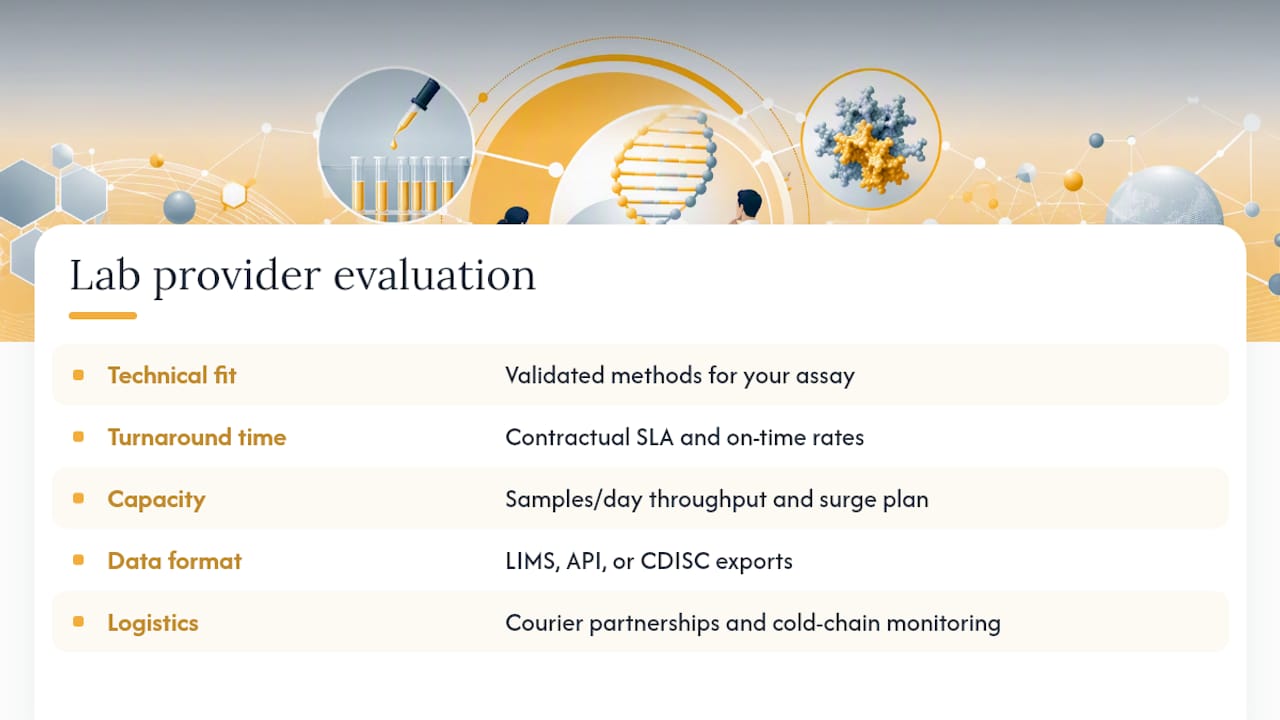
The single strongest selection criterion is straightforward: can this lab deliver validated, analysis-ready data on schedule and to your protocol's exact specifications? Everything else in the evaluation is a proxy for that answer.
Technical fit comes first. Confirm the lab has validated methods for your specific assays, not just the general platform. A lab with an NGS instrument but no validated oncology panel is not a fit for a tumor profiling study.
Turnaround time needs to be contractually defined, not estimated. Ask for SLA documentation and historical on-time delivery rates for the specific service type you need.
Capacity and scalability matter for multi-site trials. Ask how many samples per day the lab can process for your assay type, and what happens to your samples during a capacity surge.
Data interoperability is increasingly decisive. A lab that can only deliver PDF reports creates manual work for your data management team. Ask whether the lab supports LIMS exports, API-based data transfer, or CDISC-formatted outputs.
QA culture is visible in how a lab responds to your questions. Slow, vague answers about deviation handling or audit history are a reliable signal of underlying process gaps.
Logistics and courier capabilities determine whether specimens arrive in acceptable condition. Ask about courier partnerships, cold-chain monitoring, and what happens when a shipment is delayed.
Pricing model and contract flexibility affect your ability to scale up or adjust scope mid-study. Fixed-price panels for routine testing and time-and-materials pricing for custom development are both reasonable, but the terms need to be explicit.
Practical questions to include in your RFP: What is your maximum daily sample throughput for this assay? What data formats do you support for result delivery? How do you handle chain-of-custody discrepancies? What is your process when a sample fails QC on receipt? Understanding biotech operational partner types can also help you frame the right vendor relationship before you issue the RFP.
Typical timelines and cost drivers for common biotech services
Most routine clinical chemistry and hematology panels turn around in 24–72 hours from specimen receipt. More specialized work takes longer.
| Service Type | Typical Turnaround | Notes |
|---|---|---|
| Routine safety panels (chemistry, CBC) | 24–72 hours | Standard for ongoing trial safety monitoring |
| ELISA / immunoassay | 3–7 business days | Depends on kit availability and batch scheduling |
| qPCR (targeted) | 2–3 business days | Faster with validated in-house methods |
| NGS (targeted panel) | 7–10 business days | Library prep and bioinformatics add time |
| Whole-genome sequencing | 3–4 weeks | Data volume and analysis pipeline drive timeline |
| Lot release / biologics testing | 2–4 weeks | Regulatory documentation requirements extend turnaround |
| Custom assay development | 8–20 weeks | Depends on target complexity and validation scope |
For PCR testing workflows specifically, validated in-house methods consistently outperform send-out options on turnaround time.
Primary cost drivers:
- Sample throughput volume (higher volume typically reduces per-sample cost)
- Assay complexity and reagent cost
- Regulatory documentation requirements (GLP/cGMP reports cost more to generate)
- Custom method development versus validated commercial kits
- Cold-chain logistics and courier fees for temperature-sensitive specimens
- Expedited or urgent processing surcharges
For routine panels with predictable volumes, negotiating a fixed-price per-sample rate upfront protects your budget from mid-study cost escalation. Reserve time-and-materials pricing for the custom development phases where scope is genuinely uncertain.
What data delivery should look like from a qualified lab
Reliable, standards-based data delivery is not optional for trial readiness. A lab that returns results only as PDF reports forces your team to manually re-enter data, which introduces errors and slows database lock.
Common data formats and their best uses:
- CSV with metadata — universal, easy to import into most LIMS and statistical packages; best for routine panel results
- JSON — preferred for API-based transfers where real-time or near-real-time result delivery is needed
- HL7/FHIR — the standard for interoperability with EMR systems; required when results need to flow directly into a clinical record
- CDISC (CDASH/SDTM) — the regulatory submission standard; labs that can deliver in SDTM format save sponsors significant data-mapping work
Integration checklist for sponsors and CROs:
- Secure file transfer protocol (SFTP or equivalent) with encryption at rest and in transit
- API availability for real-time result retrieval
- Data validation reports confirming completeness and range checks
- Full audit trail from specimen receipt to result release
- Sample-level metadata (collection date/time, site ID, storage conditions, QC flags)
- Deviation notifications when a result falls outside expected parameters
Laboratory API integration is increasingly the standard expectation for sponsors running electronic data capture systems. Labs that cannot support API-based delivery or structured exports are a friction point in any modern trial data flow. Kohealth Labs's AI-driven analytics platform goes a step further by identifying data deviations automatically and flagging them before results reach the sponsor, which reduces the volume of data queries at database lock.
Key technologies and assays you'll encounter, and their tradeoffs
Every platform has a sweet spot and a limitation. Knowing both helps you match the right tool to your study design.
NGS (Next-Generation Sequencing) delivers broad genomic coverage in a single run. Best for discovery work, tumor profiling, and pharmacogenomics. The limitation: turnaround is slower than targeted methods, and bioinformatics pipelines require validation before regulatory use.
qPCR is fast, quantitative, and well-understood by regulators. Best for gene expression, viral load, and pathogen detection. The limitation: it measures only the targets you design for, so it misses unexpected variants.
ddPCR (Droplet Digital PCR) offers absolute quantification without a standard curve, making it valuable for rare variant detection and copy number variation. The limitation: throughput is lower than qPCR, and the workflow is more complex.
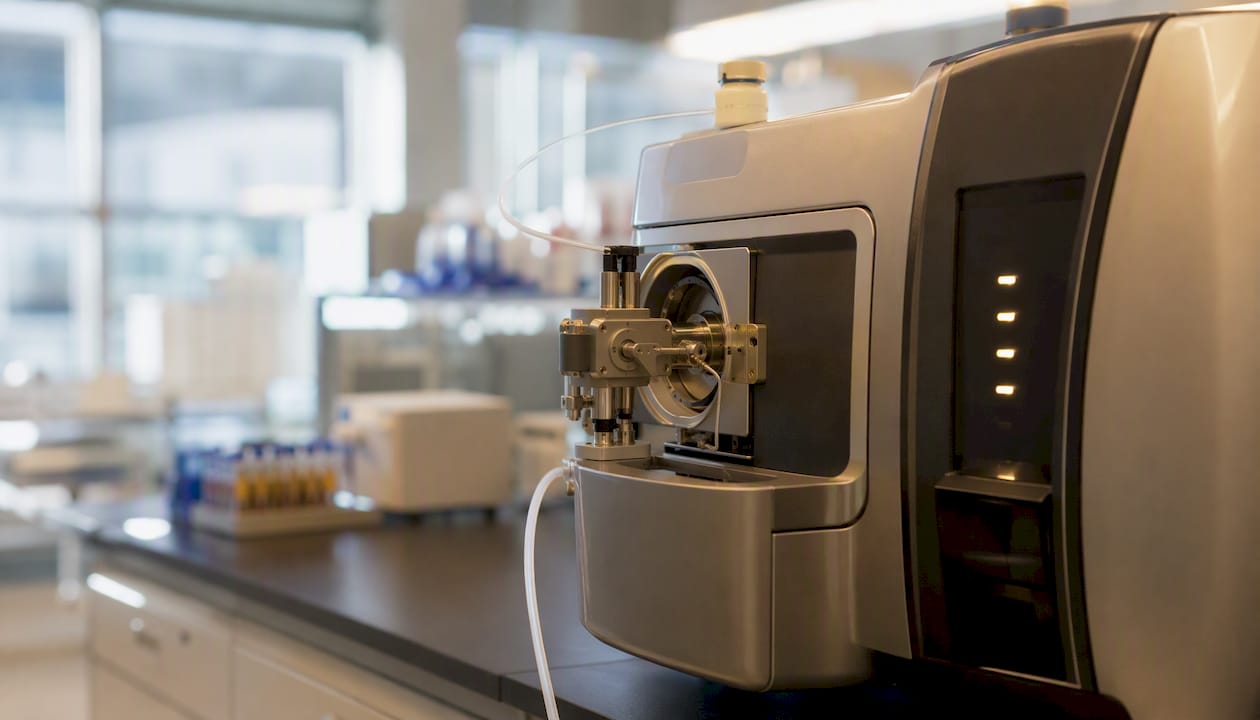
Mass spectrometry is the gold standard for metabolomics, proteomics, and small-molecule bioanalysis. Best for PK/PD studies and biomarker discovery. The limitation: instrument expertise and method development time are significant.
ELISA remains the workhorse for protein quantification and immunogenicity testing. Fast, cost-effective, and widely accepted by regulators. The limitation: cross-reactivity and matrix effects can compromise specificity in complex biological samples.
Flow cytometry is essential for immunophenotyping and cell-based functional assays. Best for oncology and immunology studies. The limitation: panel design complexity increases with the number of markers, and instrument standardization across sites is a known challenge.
Automated liquid handling reduces pipetting error and increases throughput for high-volume sample processing. The limitation: setup and validation time for new assay formats can be substantial.
Automation and robotics improve consistency in high-throughput settings, and AI-based QC tools are now used to flag anomalous results before they leave the lab. That said, human review remains necessary for any result that will drive a clinical decision or appear in a regulatory submission.
How integrated diagnostics accelerated a multi-modal clinical trial
The clearest argument for integrated lab and radiology delivery comes from what happens when those data streams are managed separately. When a sponsor receives lab safety data from one vendor and imaging reads from another, the data arrives in different formats, on different timelines, and with no shared reference identifiers. Reconciling those datasets before a safety review meeting consumes hours that could be spent on the review itself. Integrated delivery eliminates that reconciliation step.
Case elements from a representative multi-modal trial:
- Project scope: Phase II oncology study with safety labs, pharmacokinetic sampling, and tumor imaging endpoints across 12 sites
- Integrated services used: Hematology and chemistry panels, biomarker testing across 40+ analytes, CT imaging reads, and AI-based QC applied to both lab and imaging data streams
- Workflow: Single contract, single point of contact, harmonized subject identifiers across lab and imaging data, courier pickup at all sites, results delivered as a unified analysis-ready bundle per visit
- Outcome highlights: Cross-vendor data queries were reduced because lab and imaging data arrived with matching subject and visit identifiers. Safety signals were detected earlier because the integrated dataset allowed the medical monitor to review lab trends and imaging changes in the same report. Cohort transition decisions were reached faster because the data package for each decision point was complete on arrival.
The mechanism is straightforward. When lab panels and imaging data share a common data model and arrive together, the sponsor's team does not need to build that integration themselves. Sponsor laboratory services structured this way consistently reduce the administrative burden on CRO data management teams and support faster database lock. Therapeutic area diagnostic support examples across oncology, neurology, and cardiovascular programs show the same pattern: harmonized data delivery shortens the path from last patient visit to clean database.
When an integrated provider is the right choice
The case for a single integrated lab and radiology partner is strongest in specific project types, and it is worth being clear about where it pays off and where it does not.
Integrated delivery provides the most value when:
- The study has both laboratory and imaging endpoints that feed the same safety or efficacy decision
- Biomarker panels are complex enough that data harmonization across vendors would require dedicated project management
- The trial runs across multiple sites and needs harmonized data collection and chain-of-custody processes
- The sponsor or CRO has limited internal data management bandwidth and needs analysis-ready bundles rather than raw outputs
A single-service vendor or in-house testing may be the better fit when the study has only one data type (labs only, no imaging), when the sponsor has a validated internal lab with excess capacity, or when a highly specialized assay is only available from one reference laboratory. Biotech workstream prioritization frameworks can help you decide which services to consolidate and which to keep separate based on your program's actual risk profile.
The consolidation argument is not about convenience alone. Fewer vendors means fewer contracts, fewer qualification audits, fewer data reconciliation cycles, and a single escalation path when something goes wrong. For sponsors managing tight timelines, that reduction in coordination overhead has a direct effect on how quickly a trial can progress.
Kohealth Labs delivers integrated diagnostics for CROs and sponsors
Kohealth Labs is built for the exact scenario this guide describes: a sponsor or CRO that needs lab testing, imaging, and analysis-ready data delivered under one contract, without the overhead of managing multiple vendors.
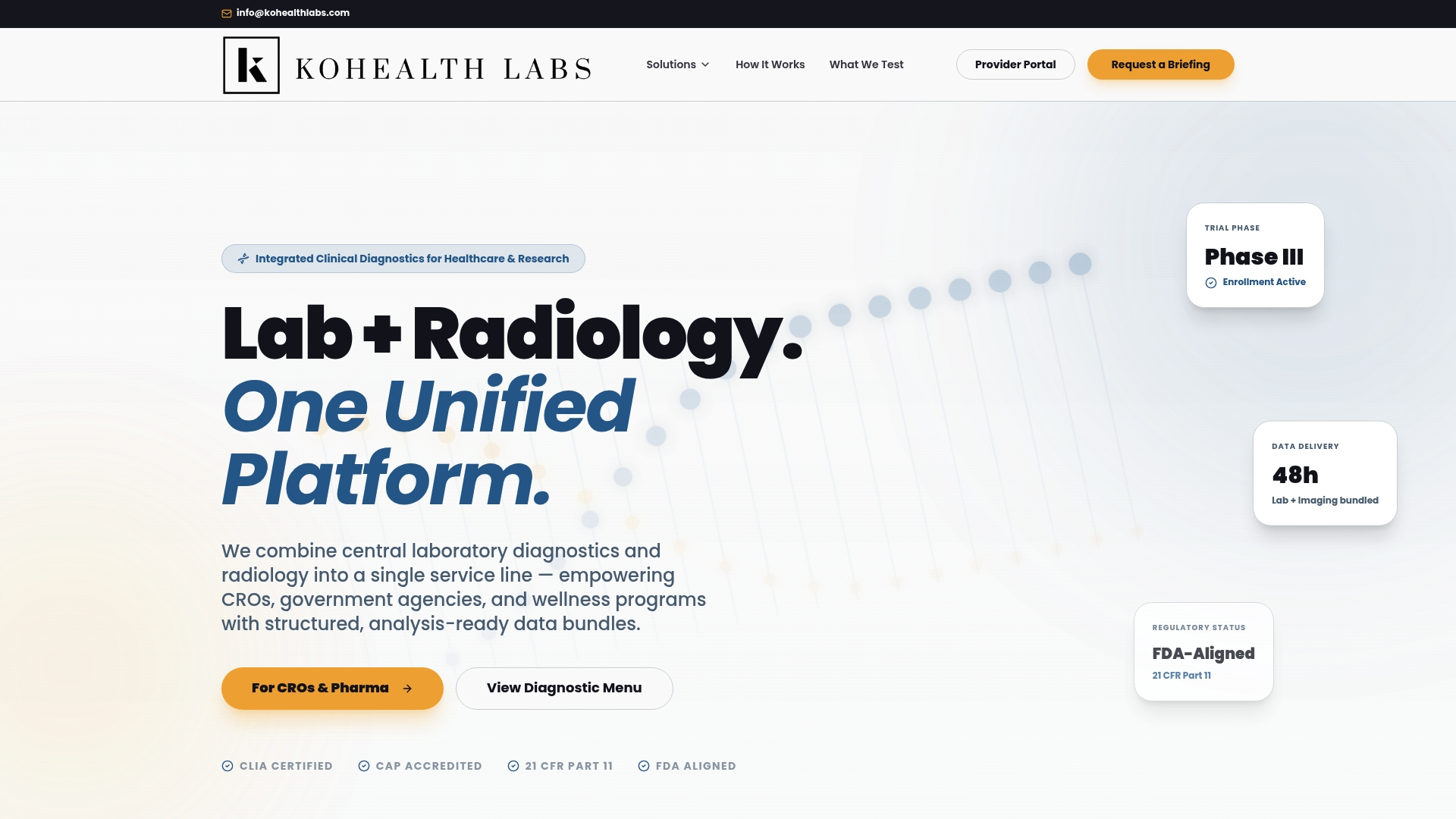
The core value is straightforward. Kohealth Labs combines laboratory diagnostics and radiology into a single-contract model, with AI-driven QC applied across both data streams before results reach your team.
Key capabilities:
- Phlebotomy and courier specimen pickup across study sites
- 100+ biomarker panels and specialty testing for clinical trials
- Radiology bundled with lab data in a unified, analysis-ready format
- EMR and LIMS integration with structured data exports
- Regulatory-aligned data delivery for sponsor and CRO reporting
- Dedicated onboarding and training for clinical operations teams
To see how Kohealth Labs fits your next study, visit the integrated diagnostics solution page or review the full test menu and request a scope-of-services call.
Sources
- Biotechnology Research — Facilities and Resources