
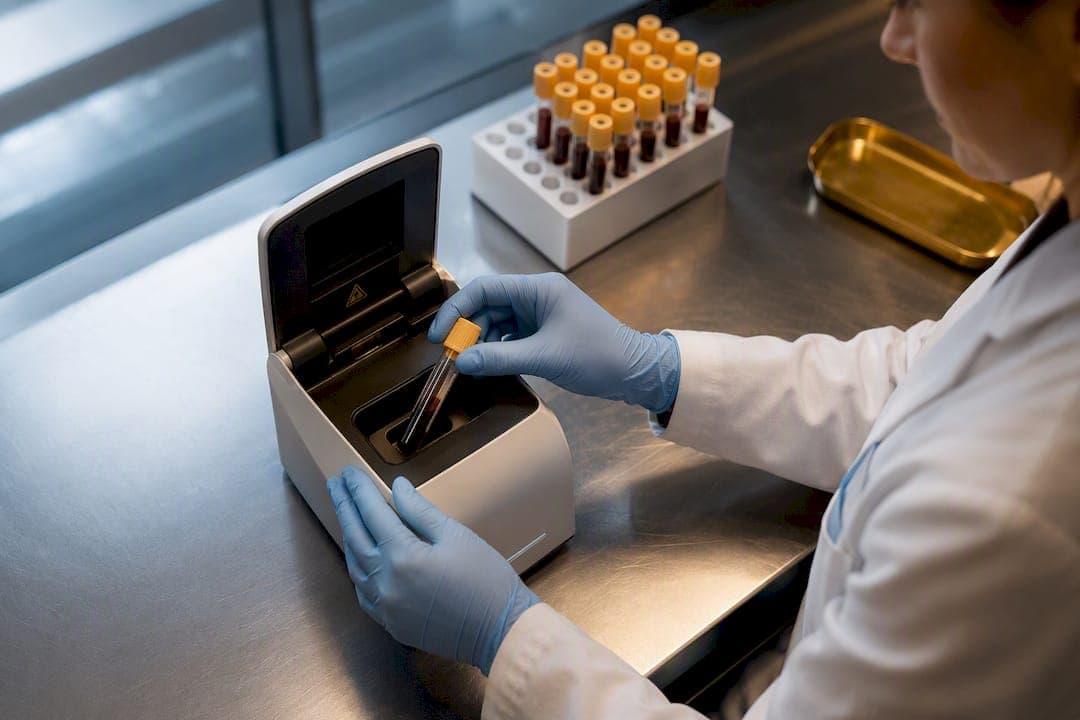
Pre-analytical variables, everything that happens from test order to sample analysis, cause the majority of laboratory errors and remain the single biggest threat to reliable clinical results. This phase covers test selection, patient preparation, collection, handling, transport, and processing, and it accounts for roughly 60 to 70 percent of total laboratory errors. For clinical trial teams and laboratory managers, that statistic isn't abstract. It's the difference between a clean dataset and a repeat draw that delays a study milestone.
TL;DR:
- Hemolysis accounts for 40 to 70 percent of sample rejections and significantly impacts lab accuracy, especially for potassium, LDH, AST, and magnesium tests.
- Configurable factors like tourniquet time under one minute and proper tube filling can reduce common collection errors that often cause sample rejection.
- Regular monitoring of hemolysis, mislabeling, and transport delays with defined targets helps identify and correct pre-analytical issues before analysis.
- Multisite clinical trials suffer from variability in specimen handling, which can cause systematic bias unless protocols specify exact procedures and documentation standards.
- Integrated diagnostics with a single partner and AI-driven quality tools can streamline workflows, improve specimen quality, and shorten trial timelines.
What Counts as a Pre-Analytical Variable?
The pre-analytical phase starts the moment a clinician orders a test and ends when the sample hits the analyzer. That span includes test selection, patient identification, specimen collection, labeling, transport, processing, and storage. Laboratory professionals increasingly separate out a "pre-preanalytical" sub-phase covering test ordering and requisition completeness, since errors at the ordering stage often cascade into everything downstream.
Multiple actors touch this phase, and handoffs are where things break down: the ordering clinician, the phlebotomist, the courier, and the lab receiving technician each own a piece of it.
- Clinicians should confirm test necessity and complete requisitions fully before collection begins.
- Phlebotomy staff must verify patient identity with two identifiers and follow correct tube order.
- Transport personnel need clear temperature and time windows for every specimen type.
- Receiving lab staff should inspect specimens on arrival, not just log them in.
Categories of Pre-Analytical Variables You Need to Track
Labs that run effective root-cause audits organize errors into distinct categories rather than treating every deviation as one undifferentiated pile.
- Patient-related: fasting status, medication timing, posture, and stress response. Largely uncontrollable by lab staff but manageable through clear patient instructions.
- Collection-related: needle gauge, tourniquet time, order of draw. Fully controllable through phlebotomy training and SOP adherence.
- Handling and processing: centrifugation speed, delay before spin, aliquoting technique. Controllable at the site level with proper equipment calibration.
- Transport and storage: temperature excursions, time-to-processing, container integrity. Partly systemic, tied to courier logistics and cold-chain infrastructure.
- Documentation: incomplete requisitions, missing collection timestamps, coding gaps. Controllable through electronic ordering and standardized metadata capture.
Moving a category from "risk" to "controlled" usually starts with picking one metric per category and reviewing it monthly rather than trying to fix everything at once.
How Common Are Pre-Analytical Errors, and Which Ones Matter Most?
Roughly 60 to 70 percent of all laboratory errors originate before the sample ever reaches the analyzer, and blood-sample quality issues account for 80 to 90 percent of those pre-analytical errors. That concentration tells you where to spend your quality-improvement budget: not on analyzer calibration, but on collection and handling.
Within that blood-sample-quality bucket, one problem dominates. Hemolysis is responsible for 40 to 70 percent of sample rejections, followed by insufficient volume (10 to 20 percent), wrong container selection (5 to 15 percent), and clotting (5 to 10 percent). Hemolyzed samples throw off potassium, LDH, AST, and magnesium readings specifically, because red cell contents leak into serum and inflate results that clinicians then act on.
Not every flagged sample needs rejection. Triage generally falls into three paths:
- Reject and recollect when hemolysis or clotting compromises the analyte being tested.
- Report with a comment when interference is mild and the analyte is hemolysis-tolerant.
- Analyze with a documented caveat when recollection isn't clinically feasible, such as a pediatric or critical-care draw.
Why Do Patient Factors Change Lab Results So Much?
A patient who walked briskly to the draw station five minutes ago doesn't have the same plasma composition as one who's been reclining for twenty. Posture shifts fluid between vascular and interstitial spaces, which concentrates or dilutes proteins, cells, and protein-bound analytes within minutes.
Fasting windows matter more than most requisition forms communicate. Lipid panels typically need 9 to 12 hours, glucose testing benefits from a defined fasting state, and some hormone panels are timing-sensitive because of circadian rhythms, cortisol being the textbook example.
- Confirm fasting duration verbally at the point of draw, not just on the requisition.
- Capture current medications and supplements, since biotin alone can distort several immunoassays.
- Standardize seated rest time before collection whenever a protocol calls for it.
- Flag and delay draws when a patient reports vigorous exercise in the prior hour.
Pro Tip: Build a five-minute seated rest period into your phlebotomy workflow as a default, not an exception. It costs almost nothing in throughput and quietly eliminates a whole category of posture-driven variance.
What Are the Best Practices for Specimen Collection and Labeling?
Collection-stage errors are the most preventable category in the entire pre-analytical process, because they're governed almost entirely by technique and discipline rather than biology or logistics.
- Confirm patient identity with two independent identifiers, then apply barcoded labels at the bedside before leaving the patient. Labeling away from the patient is one of the most common sources of misidentification.
- Follow the standard order of draw: blood cultures first, then coagulation tubes, then serum, then heparin, then EDTA, then oxalate/fluoride tubes, to prevent additive carryover between tubes.
- Fill tubes to their marked volume. Underfilled coagulation tubes skew the anticoagulant-to-blood ratio and produce falsely prolonged clotting times.
- Mix additive tubes with the recommended number of gentle inversions immediately after draw; vigorous shaking causes hemolysis.
- Limit tourniquet time to under one minute, since prolonged stasis raises potassium, lactate, and total protein readings.
- When drawing from a central line or vascular access device, discard the appropriate flush volume first to avoid dilution artifacts.
- Reject at source when a specimen shows visible clots, gross hemolysis, or clear mislabeling, rather than passing the problem downstream. Kohealth Labs details bedside identification workflows further in its sample labeling standards guide.
How Should Labs Handle Processing, Transport, and Storage?
Once a sample leaves the collection site, the clock starts working against you. Time-to-processing and temperature are consistently the most commonly reported factors affecting biomarker stability across research studies, and they're also the easiest to standardize once you commit to fixed parameters.
- Set and document exact centrifuge specifications: g-force, spin duration, temperature, and whether the brake is used, since these vary enough between sites to shift proteomic and metabolomic results.
- Record the delay between collection and centrifugation for every specimen type, and set analyte-specific maximum thresholds rather than one blanket rule.
- Monitor and log transport temperature continuously rather than trusting a cooler and a guess; cold-chain lapses are invisible until the result comes back wrong.
- Aliquot samples at the point of processing to avoid repeated freeze-thaw cycles, which degrade hormones, cytokines, and many protein biomarkers.
- Default to local centrifugation for analytes with known instability at room temperature, and reserve centralized processing for stable analytes where consolidation saves time without sacrificing accuracy.
Kohealth Labs covers cold-chain logistics in more depth in its specimen transport guide, including temperature monitoring thresholds by specimen class.
What Documentation and Quality Indicators Should Labs Track?
You can't fix what you don't measure, and pre-analytical quality is notoriously easy to under-measure because most of it happens outside the four walls of the lab. The Standard PREanalytical Code (SPREC) gives labs a structured way to record specimen type, processing time, and storage conditions so downstream users can interpret biomarker stability with confidence.
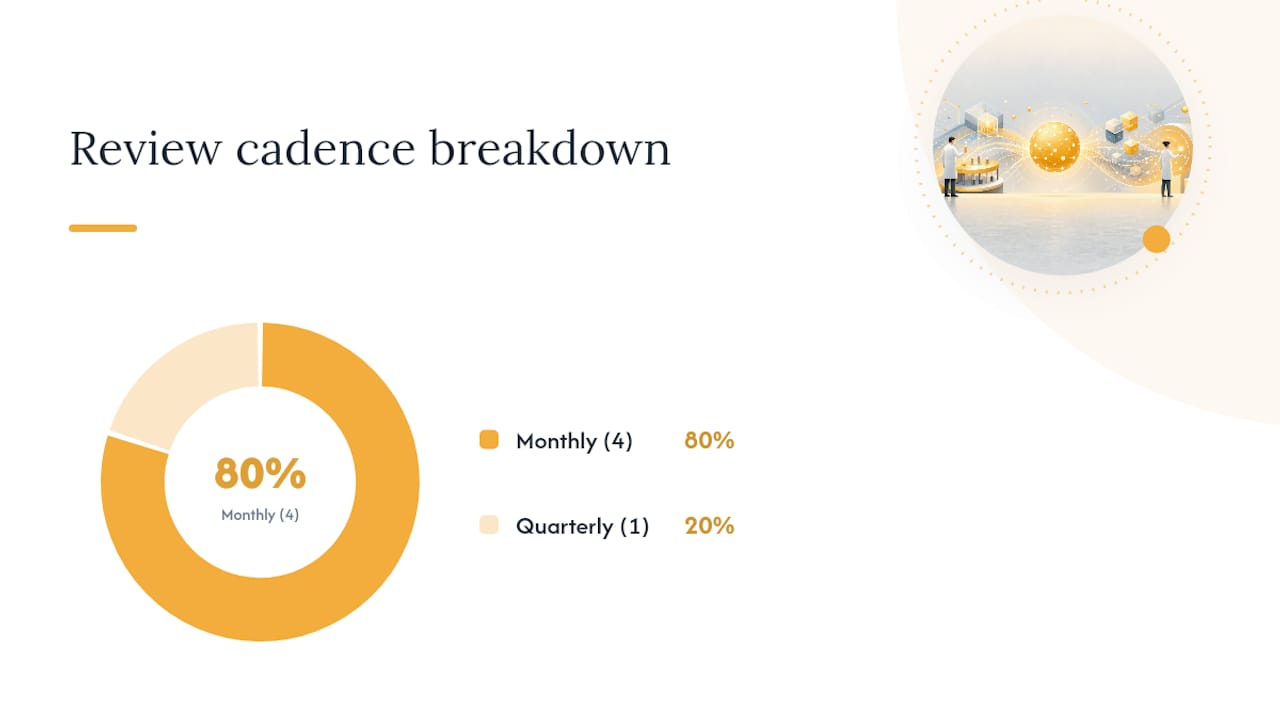
Quality indicators worth tracking on a recurring basis include hemolysis rate, clotted-sample rate, mislabeling rate, insufficient-volume rate, and average transport delay. Position papers on preanalytical quality recommend setting numeric targets for each, reviewing them monthly, and treating drift in any single indicator as a trigger for corrective action rather than waiting for an annual audit.
| Quality indicator | What it flags | Suggested review cadence |
|---|---|---|
| Hemolysis rate | Collection technique, tube handling | Monthly |
| Mislabeling rate | Identification workflow gaps | Monthly |
| Insufficient volume rate | Draw technique, tube selection | Monthly |
| Transport delay average | Courier logistics, cold chain | Quarterly |
Kohealth Labs' hemolysis rejection guide lays out practical threshold-setting for that first row specifically.
Why Do Pre-Analytical Variables Threaten Clinical Trial Data?
A single-site lab can absorb some pre-analytical inconsistency because the same staff, same equipment, and same habits repeat daily. Multicenter trials don't get that luxury. Different sites draw, spin, and store samples slightly differently, and that variability introduces systematic bias that can undermine biomarker validity before statisticians ever see the data.
The PREDICT checklist was developed specifically to close that gap, and its core requirements are worth building directly into protocol design.
- Involve laboratory professionals in test selection during protocol design, not after site activation.
- Specify exact centrifugation parameters (g-force, time, temperature) as a protocol requirement, not a site preference.
- Require documented time-and-temperature transport monitoring for every shipped specimen.
- Mandate aliquoting procedures and freeze-thaw limits in writing.
- Decide centralized versus local processing based on published analyte stability data, not convenience.
Sponsors and CROs managing multiple sites benefit from centralizing documentation review even when processing itself stays local. Kohealth Labs discusses that coordination approach in how to coordinate multi-site diagnostic research data, and clear translation of collection instructions matters too, particularly across EU sites where language gaps can quietly reintroduce the exact variability a protocol was written to prevent.
What Detection Tools Actually Catch Pre-Analytical Errors?
Manual visual inspection misses a surprising amount. A mildly hemolyzed sample can look normal to the eye while still throwing off potassium or LDH results, which is why automated hemolysis, icterus, and lipemia (HIL) indices on modern analyzers matter more than most labs give them credit for.
- HIL indices flag compromised samples automatically and can trigger a rejection comment or an analyte-specific caveat without human judgment calls.
- LIS/LIMS-driven barcode workflows catch misidentification at scan time, before a result ever gets reported against the wrong patient.
- Provider portals that guide test selection at the point of order reduce pre-preanalytical errors by making requisition completeness a built-in requirement rather than an afterthought.
Together, these tools shift error detection from "after the fact review" to "before the result is even generated," which is where the real time savings live.
How Integrated Diagnostics Reduce Pre-Analytical Risk
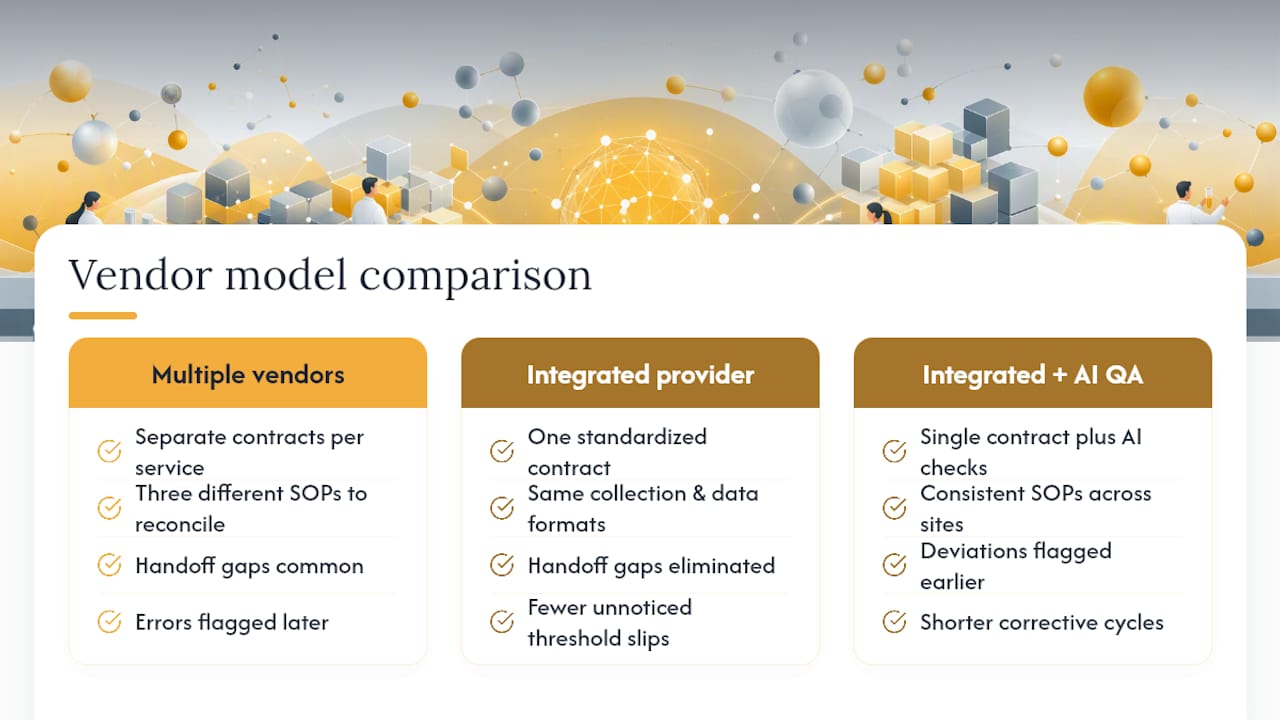
Fragmented vendor relationships create their own pre-analytical risk. When labs, radiology, and data reporting run through separate contracts, tube specifications, courier schedules, and documentation formats rarely match, and every mismatch is a chance for a specimen to sit too long or get processed against the wrong parameters. Kohealth Labs addresses this through a single-contract model that standardizes tubes, devices, and courier pickup across labs and imaging simultaneously, which is how integrated diagnostics, including labs, radiology, and data. This accelerates clinical trials by removing the coordination gaps where pre-analytical errors typically start.
AI-driven data checks flag deviations against expected ranges earlier in the workflow, shortening the correction cycle before a bad sample turns into a bad dataset. Sponsors evaluating integrated models can review Kohealth Labs' diagnostics infrastructure and its AI-driven data quality approach for more detail.
A Practical Checklist You Can Apply Today
- Preprotocol: involve lab staff in test selection and confirm analyte stability windows and required tube types before site activation.
- Collection: verify two-identifier ID, apply bedside barcoded labels, follow order of draw, and cap tourniquet time under one minute.
- Processing and transport: fix centrifuge g-force, time, and temperature; log time-to-processing; monitor transport temperature continuously; aliquot to avoid freeze-thaw cycles.
- Documentation and monitoring: capture SPREC fields, log HIL index outputs, and review quality indicator targets on a fixed monthly cadence with a defined deviation-handling path.
Why the Pre-Analytical Phase Deserves More Attention Than It Gets
Most quality investment in laboratory medicine still flows toward analyzers and assay validation, the parts of the process that are easiest to audit. That's backwards. The phase causing 60 to 70 percent of errors happens before a sample ever reaches an instrument, which means the biggest reproducibility gains sit in phlebotomy training, transport logistics, and documentation discipline, not in buying a newer analyzer. Fewer pre-analytical deviations mean fewer protocol amendments and shorter trial timelines. Better lab-to-clinic collaboration on test selection alone would eliminate a meaningful share of the errors this article covers.
— Kohealth Labs
Simplify Pre-Analytical Control With One Integrated Partner
Integrated diagnostics providers offer an alternative to juggling separate lab, radiology, and courier vendors for clinical trial specimen management: one contract standardizes collection tubes, courier pickup windows, and data delivery formats across every site, so the handoff gaps where pre-analytical errors start simply don't exist in the first place.

That single-contract structure means your trial team isn't reconciling three different SOPs from three different vendors every time a new site comes online. AI-driven quality checks flag sample deviations earlier, which shortens the corrective cycle and keeps time-to-processing thresholds from slipping unnoticed. For CROs and pharma sponsors managing multi-site studies, that consistency translates directly into fewer repeat draws and cleaner data going into analysis.
If you're evaluating diagnostic partners for an upcoming trial, review Kohealth Labs' integrated diagnostics services for CROs and pharma sponsors and request a consultation to see how a consolidated lab, radiology, and data pipeline fits your protocol's specific specimen handling requirements.
This article is general information, not a substitute for advice from a qualified doctor. Consult a qualified healthcare professional about your own circumstances before acting on anything here.