
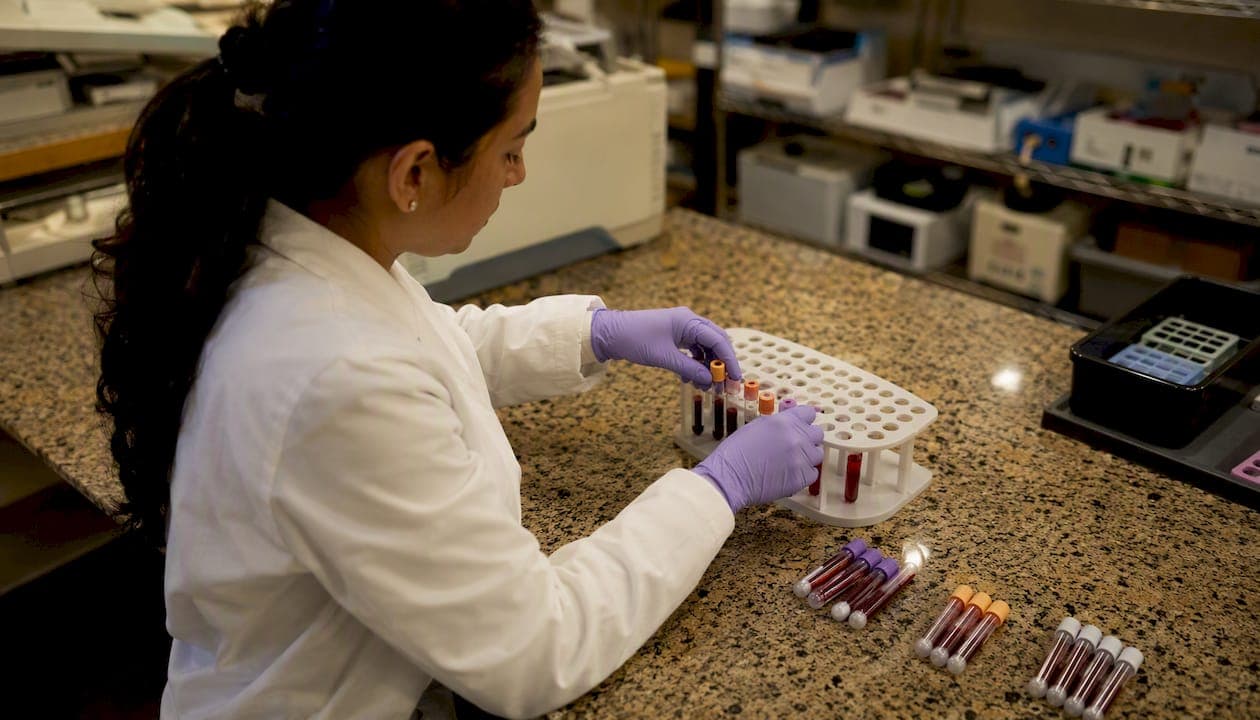
A medical laboratory is a clinical facility where trained professionals analyze blood, tissue, and other specimens to produce the diagnostic data that drives most treatment decisions. Physicians order lab work before diagnosing diabetes, confirming an infection, monitoring cancer treatment, or clearing a patient for surgery, and the results shape what happens next. Regulatory oversight through CLIA and quality frameworks like ISO 15189 keep that data trustworthy, while the Bureau of Labor Statistics counted roughly 351,200 clinical laboratory technologist and technician jobs in 2024, with a median annual wage of $61,890.
A functioning lab runs on four connected activities:
- Specimen collection and processing — drawing, labeling, and preparing blood, urine, tissue, or swabs for analysis.
- Testing — running chemistry panels, cultures, molecular assays, and other diagnostic procedures on automated or manual platforms.
- Data reporting — validating results and transmitting them into the medical record where clinicians can act on them.
- Quality assurance — running controls, proficiency testing, and calibration checks that catch errors before they reach a patient's chart.
Most people encounter a medical laboratory only through a blood draw, but the infrastructure behind that single tube of blood involves specialized departments, credentialed staff, and layers of regulatory checks most patients never see.
What Is a Medical Laboratory and How Is It Organized?
The term "medical laboratory" covers several distinct operating models, and the differences matter if you're choosing a career path, evaluating a vendor, or trying to understand why your test results took three days instead of three hours.
Hospital and clinical laboratories sit inside or adjacent to a hospital and handle the bulk of routine testing for inpatients and emergency departments. They're built for speed: a complete blood count or basic metabolic panel needs to come back in minutes, not days, when a patient is in the ER.
Reference laboratories are large, centralized operations that handle high volumes of routine work alongside highly specialized "esoteric" testing that individual hospitals can't justify running in-house. Mayo Clinic Laboratories is a well-known example, combining routine testing at scale with consultative expertise for rare or complex diagnoses. This split exists because expensive instrumentation and specialist interpretation only make financial sense when spread across a large test volume.
Public health laboratories handle surveillance work, including outbreak investigation and newborn screening, and typically operate under state or federal authority rather than as commercial entities.
Point-of-care testing (POCT) happens right where the patient is, in a clinic, ambulance, or bedside setting, trading some analytical precision for speed. A rapid strep test or glucose meter is POCT.
Research and translational laboratories support clinical trials and academic studies rather than direct patient care decisions, though the line between research testing and clinical testing has blurred considerably as molecular diagnostics have matured.
| Lab Type | Primary Function | Typical Turnaround | Common Setting |
|---|---|---|---|
| Hospital/clinical | Routine inpatient and emergency testing | Minutes to hours | Hospital, health system |
| Reference laboratory | High-volume routine plus esoteric testing | Hours to days | Centralized facility |
| Public health | Surveillance, outbreak, newborn screening | Days | State/federal agency |
| Point-of-care | Immediate bedside or field results | Minutes | Clinic, ambulance, bedside |
| Research/translational | Trial-specific and investigational testing | Varies by protocol | Academic, CRO, sponsor site |
Inside any of these facilities, work is organized by department. Hematology examines blood cells and clotting function. Clinical chemistry measures electrolytes, enzymes, and metabolic markers. Microbiology identifies infectious organisms and tests antibiotic susceptibility. Molecular diagnostics looks at DNA and RNA for genetic and infectious disease testing. Transfusion medicine manages blood banking and compatibility testing. Histology and anatomic pathology prepare and examine tissue samples under a pathologist's direction. A medical practice laboratory inside a physician's office typically runs a narrow slice of this work, referring anything complex out to a reference lab.
Who Works in a Medical Laboratory?
Behind every lab report is a chain of credentialed professionals, and the education requirements vary more than most people expect.
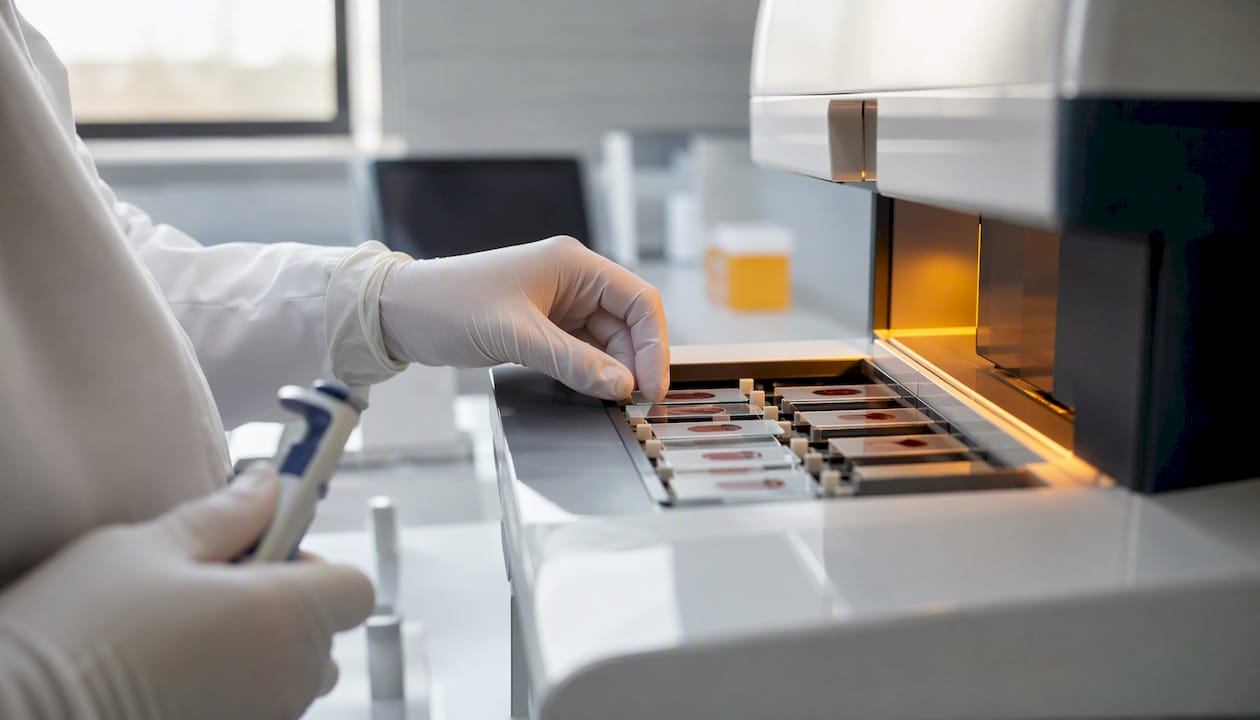
Phlebotomists collect the specimens and usually complete a certificate program of a few months rather than a full degree. Medical laboratory technicians (MLTs) run routine testing and typically hold an associate degree from a NAACLS-accredited program. Medical laboratory scientists (MLS), sometimes still called medical technologists, hold a bachelor's degree and handle more complex analytical work, method validation, and troubleshooting. Histotechnologists prepare tissue slides for pathologists to examine. Lab managers oversee operations, staffing, and compliance, often after years of bench experience plus additional management training. Pathologists, physicians with specialized residency training, provide the final diagnostic interpretation for complex cases like biopsies and give clinical sign-off on results that fall outside routine parameters.
- Phlebotomist: certificate program, several months
- MLT: associate degree, NAACLS-accredited program
- MLS/MT: bachelor's degree, broader scope of practice
- Histotechnologist: specialized certificate or degree track
- Lab manager: bench experience plus management credentialing
- Pathologist: MD/DO with pathology residency
Certification typically runs through the ASCP Board of Certification, and many states require licensure on top of that national credential. The American Society for Clinical Laboratory Science formally defines the profession's scope of practice and pushes for competency-based standards, which matters because "medical laboratory scientist" isn't a loosely used title. It corresponds to specific education and testing requirements that protect both the profession and the patients relying on its output.
Pro Tip: If you're weighing an MLT versus MLS path, check whether your target state requires licensure beyond national certification. Some states treat the two credentials very differently for scope of practice, and it changes what you're allowed to sign off on.
The Bureau of Labor Statistics projects modest employment growth through 2034 for clinical laboratory technologists and technicians, with the median wage sitting at $61,890 as of May 2024. That growth rate looks unremarkable on paper, but it undersells a workforce squeeze already playing out in many hospital labs, where retirements are outpacing new graduates in several regions.
How Does Specimen Testing Actually Work?
Every lab test moves through three phases, and knowing where things go wrong is more useful than knowing how the testing itself works.
The pre-analytical phase covers everything before the actual test: patient identification, specimen collection, labeling, and transport to the lab. The analytical phase is the testing itself, whether that's a chemistry analyzer running a panel or a technologist reading a culture plate. The post-analytical phase covers result verification, interpretation, and delivery to the ordering clinician.
Here's what surprises most people outside the field: the testing step is rarely where things go wrong. Pre-analytical issues account for roughly 60% to 70% of all laboratory-related errors, driven by mislabeled tubes, wrong collection containers, hemolyzed samples, or specimens that sit too long at the wrong temperature before reaching the bench.
60 to 70 percent of laboratory errors happen before a specimen ever reaches the analyzer.
That statistic reframes how a lab should think about quality. Instrument precision matters, but a lab with a flawless analyzer and a sloppy collection process still produces bad data. Labs that take this seriously invest in standardized labeling protocols, temperature-controlled courier logistics, electronic specimen tracking that flags a mislabeled tube before it's processed, and structured onboarding for any provider site submitting specimens. Pre-analytical quality depends as much on courier logistics and provider training as it does on instrument sophistication.
Pro Tip: If you're a student or new phlebotomist, build a two-second habit: confirm patient identity, confirm tube type against the test ordered, and confirm the label is applied at the bedside, not later at a workstation. Most mislabeling errors happen in that gap between draw and labeling.
What Equipment and Automation Do Clinical Labs Use?
Lab instrumentation ranges from a technologist manually reading a culture plate under a microscope to a fully automated system that never requires a human hand between tube and result. The methods and tiers both matter for understanding how modern labs operate.
Common testing methods include:
- Spectrophotometry for measuring chemical concentrations by light absorption.
- Immunoassay analyzers for detecting antibodies, hormones, and infectious disease markers.
- PCR and other molecular platforms for detecting genetic material, widely used for infectious disease and genomic testing.
- Mass spectrometry (LC-MS/MS) for high-precision detection of drugs, hormones, and metabolic compounds.
- Flow cytometry for analyzing cell populations, often used in blood cancer diagnosis.
- Hematology analyzers for automated blood cell counting and differentiation.
- Culture and susceptibility systems for identifying bacteria and testing antibiotic effectiveness.
Automation exists on a spectrum. Manual testing still handles specialized or low-volume assays where automation isn't cost-effective. Modular or stand-alone automation links individual analyzers for specific test categories, common in mid-sized labs. Total lab automation (TLA) connects specimen sorting, testing, and result verification into one continuous track system, the kind of setup you'll find in the largest reference labs processing tens of thousands of specimens daily.
The trade-off is straightforward: TLA dramatically increases throughput and reduces manual handling errors, but it requires significant capital investment and shifts staff roles from hands-on testing toward system oversight, troubleshooting, and quality monitoring. A molecular diagnostics platform running PCR panels, for instance, behaves very differently on a bench-top unit than it does when integrated into a TLA track, and that difference affects both turnaround time and staffing needs.
How Do Lab Systems Connect to Clinician Workflows?
A laboratory information system (LIS) is the software backbone that tracks specimens, manages test orders, and routes results, and its integration with the electronic medical record determines how quickly a clinician actually sees a result after it's finalized. A well-integrated LIS pushes results directly into the EMR the moment they're verified; a poorly integrated one means someone is faxing or manually re-entering data, introducing delay and transcription risk.
Digital pathology has extended this further by letting pathologists review scanned tissue slides on a screen rather than a physical slide under a microscope, enabling remote consultation and easier archiving. Genomics adds another data layer entirely, since sequencing output requires structured pipelines to turn raw genetic data into a clinically usable report.
AI tools are increasingly layered on top of this infrastructure for quality flagging, pattern recognition, and building analysis-ready datasets rather than replacing analytical testing itself. An AI model watching for outlier values across thousands of specimens can flag a likely pre-analytical error, like a hemolyzed sample masquerading as a potassium spike, faster than a manual review would catch it.
The real bottleneck in most clinical trials isn't the testing itself. It's reconciling lab data, imaging data, and clinical data that were never designed to talk to each other. Structured, analysis-ready data bundles solve a logistics problem that costs sponsors real time on every trial.
That logistics problem is why integrated telehealth diagnostic workflows and AI-supported diagnostics have become a bigger part of how modern labs compete, not just on test accuracy but on how fast that accurate data actually reaches the people making decisions with it.
What Accreditation and Quality Standards Apply to Labs?
In the United States, the Clinical Laboratory Improvement Amendments (CLIA) set the federal baseline for lab quality, categorizing tests by complexity level (waived, moderate, or high complexity) and dictating the personnel qualifications, quality control, and proficiency testing required for each tier. A lab running only waived tests, like a basic urine dipstick, faces far lighter oversight than one running high-complexity molecular assays.
CAP (College of American Pathologists) accreditation is a voluntary, peer-inspection-based program that many labs pursue on top of CLIA compliance because it's widely regarded as a more rigorous quality benchmark, and it's often required by hospital systems and insurers. ISO 15189 is the international standard for medical laboratory quality and competence, used heavily outside the U.S. and increasingly referenced by labs seeking global credibility.
| Framework | Type | Scope | Who Requires It |
|---|---|---|---|
| CLIA | Federal regulation | All U.S. labs testing human specimens | U.S. government (mandatory) |
| CAP accreditation | Voluntary peer inspection | Comprehensive lab operations | Hospitals, insurers, many labs |
| ISO 15189 | International standard | Quality and competence | Global labs, multinational trials |
Day-to-day quality assurance runs on a few consistent practices:
- Internal quality control using known reference materials run alongside patient samples.
- External proficiency testing, where labs test blind samples and compare results against peer labs.
- Scheduled equipment calibration and preventive maintenance.
- Documented competency assessment for every staff member performing patient testing.
None of this works without paper trails. Standard operating procedures, documented per CLSI guidance, and structured risk management give labs a defensible record when something does go wrong, and they're usually the first thing an accreditation surveyor asks to see.
How Are Lab Results Validated and Reported to Clinicians?
A result doesn't leave the lab the moment an analyzer produces a number. It passes through a verification chain: the technologist reviews the raw result against expected ranges and quality control data, a supervisor may review flagged or unusual results, and for complex diagnostic categories like anatomic pathology, a pathologist provides the definitive clinical interpretation before the report is finalized.
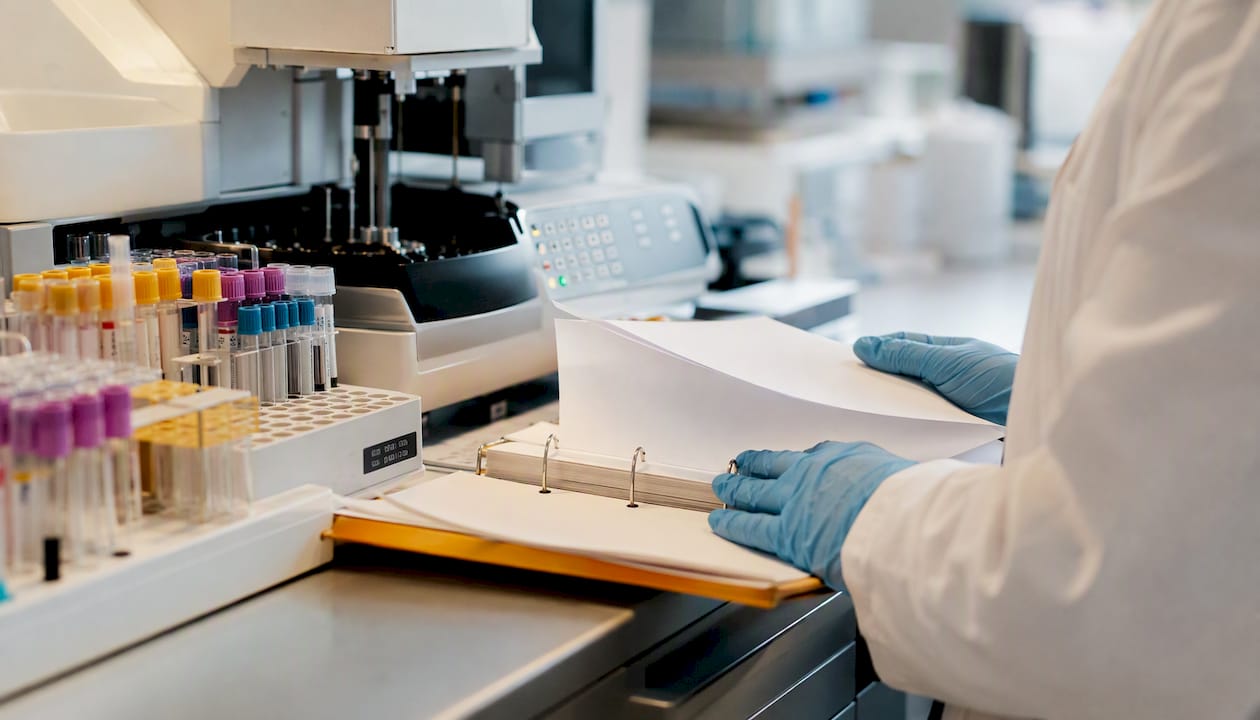
Critical-value reporting is a safety mechanism for results dangerous enough to require immediate clinician notification, like a severely low potassium level. Labs typically have strict protocols requiring a direct phone call, not just an EMR flag, for these values. Reflex testing lets a lab automatically run a follow-up test based on an initial result, such as ordering a confirmatory test after an abnormal screening result, without waiting for a new order from the clinician.
A typical workflow looks like this: a specimen is collected and transported to the lab, tested on the appropriate platform, verified against quality control parameters, and transmitted electronically into the EMR, where the ordering clinician reviews it, often alongside interpretive comments the lab has added for context. That interpretive layer, brief notes explaining what an unusual result might mean or suggesting next steps, is where a lab's clinical value goes well beyond simply generating numbers.
What Trends Are Reshaping Laboratory Medicine?
The industry is converging on a hybrid model: keep fast, high-volume routine testing local for same-day turnaround, and centralize low-volume, complex, or esoteric testing at reference labs where expensive instrumentation and specialist expertise can be justified across a larger patient population. This split isn't new, but molecular and genomic testing growth has accelerated it considerably, since few individual hospitals can afford the equipment and staffing for advanced genomic panels in-house.
Several forces are reshaping day-to-day lab operations:
- Workforce shortages and retention pressure, as retiring technologists outpace new graduates in many regions.
- Rising demand for cross-trained staff who can operate increasingly automated and informatics-heavy systems.
- Growth in molecular and genomic testing volume, pushing more work toward centralized, specialized facilities.
- Expanding AI and automation adoption for quality flagging, throughput, and data structuring.
- Rising interest in integrated diagnostics that combine lab, imaging, and data services for faster clinical trial timelines.
Automation is changing job roles as much as it's changing throughput. A technologist on a total lab automation track spends less time pipetting and more time monitoring system flags, troubleshooting instrument alerts, and interpreting edge cases the automation can't resolve on its own. That shift raises the skill ceiling for entry-level roles even as it reduces the raw headcount needed for routine volume.
For clinical research organizations specifically, the opportunity is data consolidation. A trial that pulls lab values from one vendor, imaging from another, and clinical data from a third spends real time just reconciling those streams before anyone can analyze a safety signal. Analysis-ready data bundles that arrive already structured and cross-referenced cut that reconciliation work out entirely.
How Do Integrated Diagnostics Speed Up Clinical Trials?
Clinical research organizations, pharmaceutical sponsors, and government health programs increasingly need more than a single lab report. They need lab data, imaging data, and biomarker analysis delivered together, in a format ready for statistical review, not scattered across three vendor portals that don't talk to each other.
This is the specific inefficiency Kohealth Labs was built to address. Rather than a sponsor managing separate contracts for phlebotomy, imaging, and data analytics, Kohealth Labs bundles laboratory testing with radiology under a single contract, covering more than 100 biomarkers alongside imaging and genomic data, and delivers it as an analysis-ready package rather than three disconnected reports.
The practical payoff shows up most clearly in safety monitoring. When lab values and imaging results arrive through separate vendors on separate schedules, a serious adverse event review can stall while a study team manually cross-references data that should have arrived together. A consolidated data bundle with AI-driven quality flagging catches deviations earlier and gets that safety signal in front of a medical monitor faster, because the reconciliation step that used to eat days of turnaround simply isn't necessary anymore.
Pro Tip: If your organization is evaluating a diagnostic partner for a trial, ask three questions upfront: how do they handle provider onboarding and training across sites, does their system integrate directly with your EMR or data platform via API, and what quality control thresholds trigger an automatic flag versus a manual review. Those three answers tell you more about real-world turnaround than any marketing brochure will.
Why Integrated Diagnostics Matter Beyond the Trial Timeline
Working through the mechanics of how a lab operates, from pre-analytical error rates to accreditation frameworks to result validation chains, makes one thing clear: the biggest gains left in clinical diagnostics aren't coming from a faster analyzer. They're coming from better integration between the systems that already exist.
A lab can run a flawless assay and still slow down a clinical trial if that result sits disconnected from the imaging data and the biomarker panel a sponsor also ordered. Kohealth Labs was built around that specific gap, pairing lab testing with radiology and AI-driven quality checks across more than 100 biomarkers so that CROs, government programs, and wellness initiatives get one coherent data package instead of three vendor invoices and a reconciliation headache. That's not a claim that instrumentation or credentialing stop mattering. It's a recognition that the industry has spent decades optimizing the analytical phase while leaving the handoffs between diagnostic modalities largely unfixed.
Get Streamlined Diagnostic Data for Your Next Trial
If you're running a clinical trial, managing a multi-site health program, or overseeing diagnostics for a healthcare practice, Kohealth Labs replaces the multi-vendor juggling act with one contract covering lab testing, radiology, and analysis-ready data delivery. That single-contract model is the concrete difference: instead of reconciling separate lab, imaging, and biomarker reports on separate timelines, your team receives one structured data bundle with AI-driven quality flagging built in.
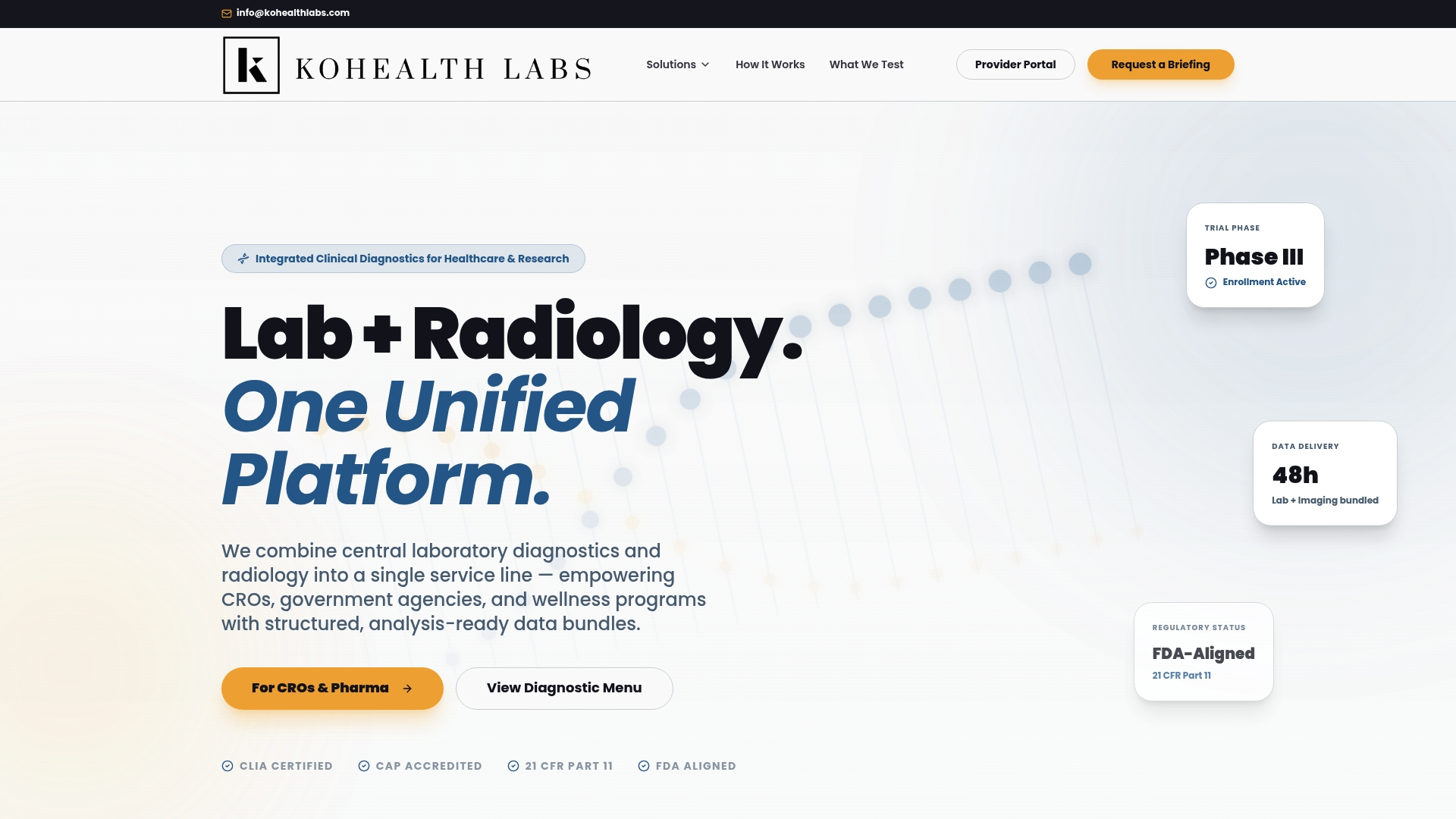
Kohealth Labs supports clinical research organizations, pharmaceutical sponsors, government agencies, telehealth platforms, and wellness programs with courier specimen pickup, provider portal access, EMR integration, and dedicated onboarding across more than 100 biomarkers, genomics, and imaging. Whether you're trying to shorten adverse-event review timelines or simplify diagnostic logistics across multiple trial sites, the integrated diagnostics platform is built to fit into your existing data infrastructure rather than force you into a new one. Reach out to Kohealth Labs to request a diagnostic scope review for your next trial or program.
Key Takeaways
Integrated diagnostics that combine lab, imaging, and AI-driven data delivery reduce trial reconciliation time far more reliably than any single-instrument upgrade.
| Point | Details |
|---|---|
| Pre-analytical phase carries the most risk | Roughly 60% to 70% of lab errors happen before testing even starts, mostly from labeling and transport issues. |
| Career paths vary by credential | Phlebotomist, MLT, and MLS roles require different education levels, with BLS reporting a median wage of $61,890 for technologists and technicians. |
| Accreditation layers build trust | CLIA sets the federal floor, while CAP and ISO 15189 add voluntary or international quality benchmarks. |
| Automation reshapes staff roles | Total lab automation shifts work from manual testing toward system monitoring and exception handling. |
| Integrated diagnostics speed trials | Kohealth Labs bundles lab, radiology, and AI-driven data delivery under one contract to cut reconciliation delays for CROs and sponsors. |
Frequently Asked Questions
What is the difference between a medical laboratory and a medical practice laboratory? A medical laboratory is the broad category covering hospital, reference, and public health facilities, while a medical practice laboratory refers specifically to testing performed inside a physician's office or clinic, usually limited to routine, lower-complexity tests under CLIA's waived or moderate-complexity categories.
How long does it take to become a medical laboratory scientist? Most MLS programs require a four-year bachelor's degree from a NAACLS-accredited program, followed by national certification through the ASCP Board of Certification. An MLT path, by contrast, typically takes about two years through an associate degree program.
Why do lab errors happen more often before testing than during it? Pre-analytical steps like specimen collection, labeling, and transport involve more manual handling and more opportunities for human error than the automated analytical phase, which is why they account for roughly 60% to 70% of laboratory errors.
What does CLIA complexity level actually mean for a test? CLIA categorizes every test as waived, moderate, or high complexity based on the skill and judgment required to perform it accurately, and that categorization determines the personnel qualifications and quality control requirements a lab must meet for that specific test.
How do integrated diagnostics help clinical trials specifically? Bundling lab, imaging, and biomarker data under one contract with structured, AI-flagged delivery removes the manual reconciliation work that otherwise delays safety signal review and slows down trial data analysis across research programs.
This article is general information, not a substitute for advice from a qualified doctor. Consult a qualified healthcare professional about your own circumstances before acting on anything here.
Sources
The references below come from federal agencies, professional societies, and primary clinical overviews, chosen because they represent the regulatory and professional bodies that actually set the standards discussed throughout this article rather than secondary summaries of them.
- Pre- and post-analytical errors in laboratory medicine (PMC)
- Clinical Laboratory - StatPearls - NCBI Bookshelf
- Clinical Laboratory Technologists and Technicians - U.S. Bureau of Labor Statistics
- Scope of Practice - American Society for Clinical Laboratory Science (ASCLS)
- Overview - Laboratory Medicine and Pathology - Mayo Clinic